Blog

  • Physical Strategic Metals Due Diligence: A Framework for Purity, Custody, Documentation, and Resale

    Physical Strategic Metals Due Diligence: A Framework for Purity, Custody, Documentation, and Resale

    Breaks in the physical strategic metals chain rarely begin with a dramatic mine shutdown. In day-to-day reviews, disruption more often appears as a missing lot number on a warehouse receipt, an assay that cannot be tied to the exact drums in storage, a provenance file that stops at the trader rather than the processor, or a resale inquiry that stalls because the material form is not widely accepted. That is the operating context for physical strategic metals due diligence: a document-heavy, lot-specific review used by family offices, private wealth advisers, and physical commodity buyers dealing with materials that sit outside standardized exchange inventories.

    • Key takeaway 1: Purity alone rarely closes the file; the decisive question is whether purity data can be tied to a named lot through sealed sampling, dated assays, and a clean title chain.
    • Key takeaway 2: Strategic metals custody and storage risk often sit in the gap between warehouse paperwork and legal title, especially in pooled arrangements or free-zone transfers.
    • Key takeaway 3: Resale friction usually comes from non-standard form, stale assay data, missing provenance, or a narrow buyer universe rather than from the metal name itself.
    • Key takeaway 4: Fees and handling charges matter less as headline numbers than as signals of who controls withdrawal, re-assay, relabeling, and final release of the lot.

    The review perimeter: product form, lot identity, and marketability

    A workable strategic metals checklist usually begins with the physical reality of the product. The same element can trade as oxide, metal, alloy, carbonate, sulfate, powder, or briquette, and those forms do not travel through the same buyer network. Rare earth materials often use TREO, or total rare earth oxide, as a headline measure, while lithium volumes are sometimes compared on an LCE, or lithium carbonate equivalent, basis even when the stored material is a specific salt. Impurities may be recorded in percent or in ppm, parts per million, and small differences at that level can separate an acceptable industrial lot from a restricted one.

    One recurring discovery in market reviews is that commercial descriptions sound standardized while the underlying product is not. “Neodymium-praseodymium oxide” may be chemically close to expectation but packaged in unsealed fiber drums, or “nickel units” may describe a form that lacks broad acceptance in downstream processing. Another common gap appears when origin, processing jurisdiction, and current storage location sit in three different countries. Chinese-origin rare earth oxide routed through a third-country processor is a typical example where paper continuity matters as much as chemistry.

    Purity and metal purity documentation

    The core evidence set for purity normally includes a recent Certificate of Analysis, the analytical method, the sample chain, and the lot identifier. In observed market practice, stronger files contain an assay from an ISO/IEC 17025-accredited laboratory such as SGS, Bureau Veritas, or Alex Stewart International. For rare earth elements, ICP-MS – Inductively Coupled Plasma Mass Spectrometry – is commonly used where trace impurities matter. For base metals such as nickel, XRF, or X-ray fluorescence, is often part of the package, though its usefulness depends on the material form and the impurity profile being tested.

    • A dated Certificate of Analysis linked to a specific lot or container number
    • Sampling records showing sealed transfer, tamper evidence, and sampler identity
    • Impurity breakdown rather than headline purity alone, including radioactive or deleterious elements where relevant
    • Assay age, with files older than six months often treated in the market as weaker evidence for active resale or transfer
    • Dual-assay files where one result comes from a seller-linked lab and one from an independent laboratory

    A well-known failure mode is the seller-lab assay that looks complete but does not describe how the sample was taken from the physical lot. That gap is especially visible in some Chinese-sourced lots, where the chemistry appears attractive until an independent re-assay ties the result to the actual drums or bags. In practice, a variance above 0.5% between the seller assay and the independent assay often shifts a lot into dispute or further sampling. Another discovery that changes downstream usability is impurity content that was not emphasized in the first document pack. A 2024 market example involving praseodymium oxide centered on re-assay findings of 2% thorium impurities, illustrating how a lot can move from apparently acceptable to operationally restricted.

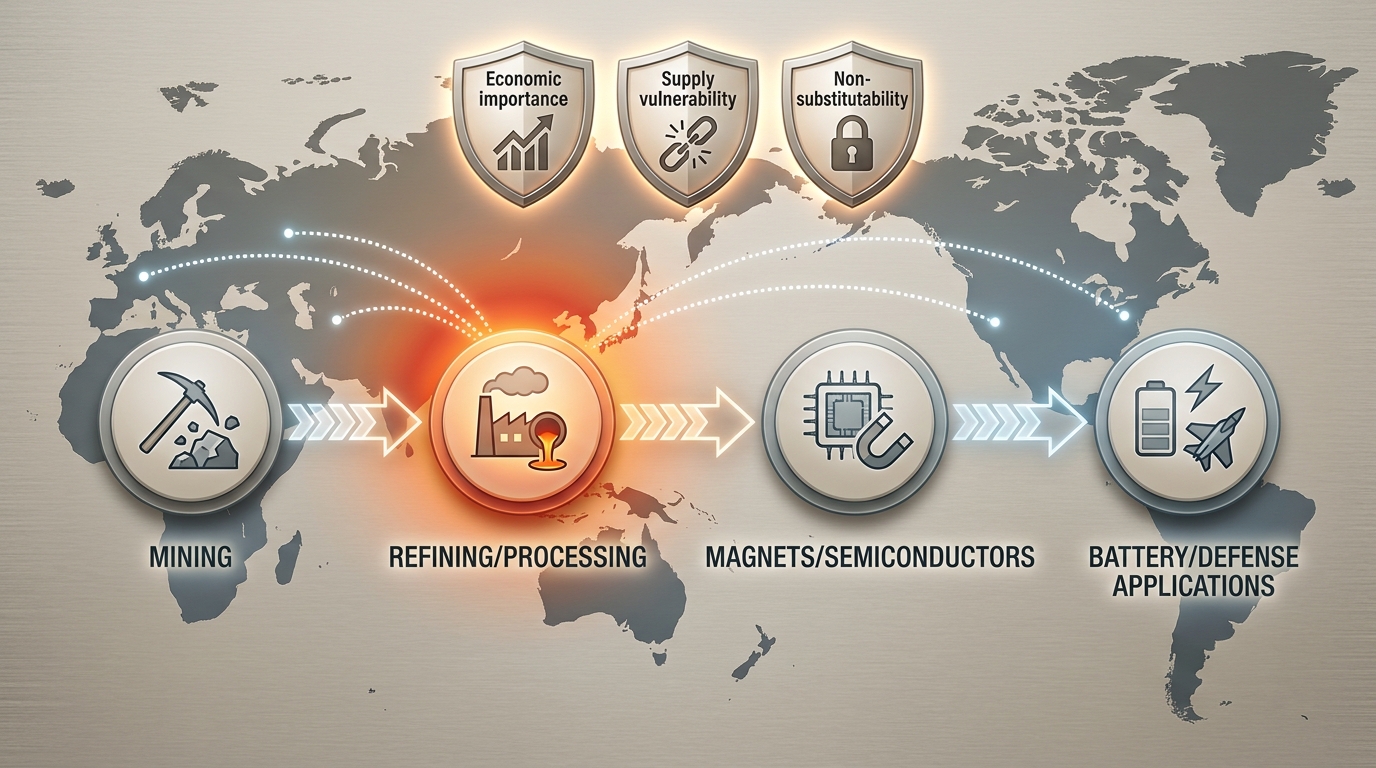
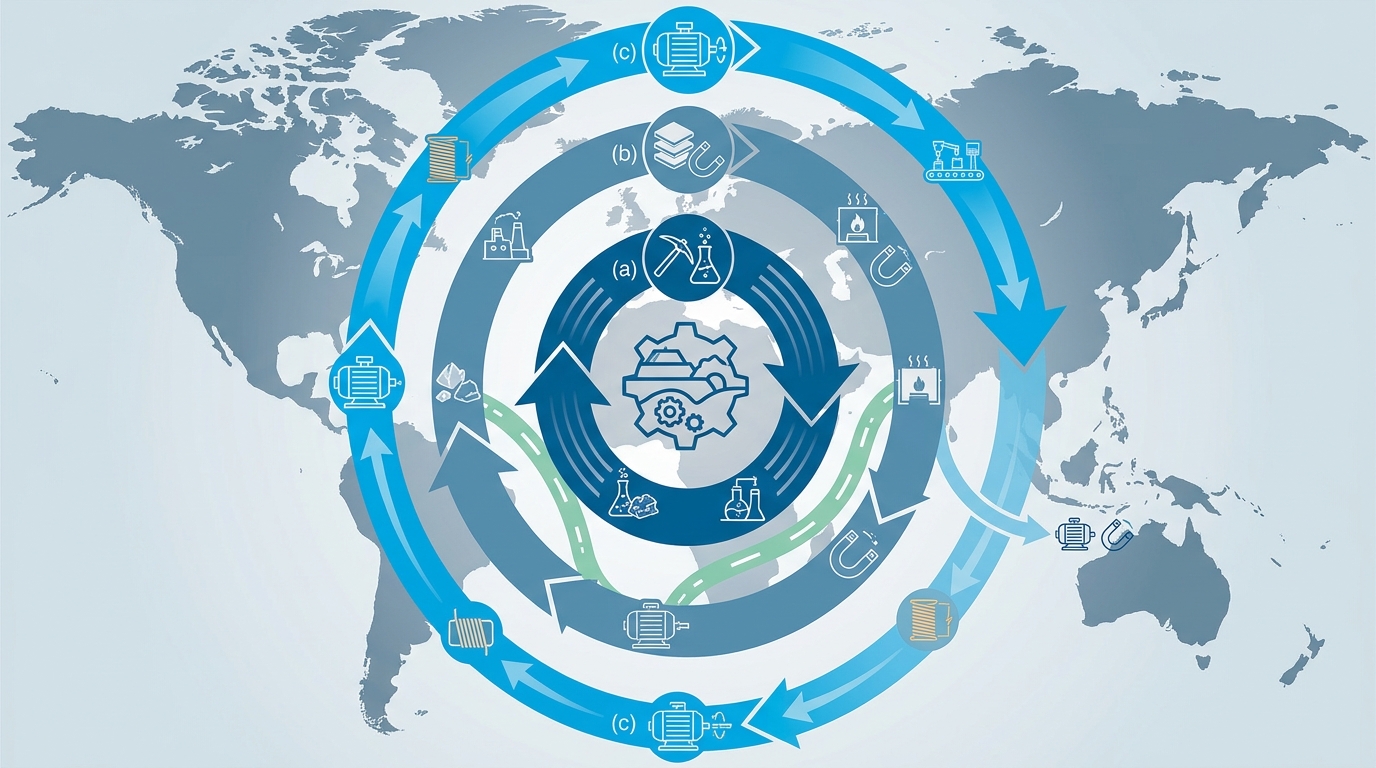
    Overview checklist infographic
    Overview checklist infographic

    Provenance, traceability, and compliance exposure

    Purity answers only part of the question. Provenance asks where the material was mined, processed, refined, exported, stored, and transferred, and whether those steps align with current compliance screens. The latest change in many reviews is that documentary sufficiency now extends beyond a Certificate of Analysis into sanctions checks, forced-labour exposure, and named processing entities. In practical terms, the stronger provenance file follows the lot from mine or processor through export documents and into storage, rather than stopping at a trading company invoice.

    • Commercial invoice, packing list, and transport document tied to the same lot reference
    • Processor or refiner statement identifying where transformation occurred
    • Customs or free-zone documentation showing entry, transfer, and current location
    • Sanctions and forced-labour screening records for relevant jurisdictions, including U.S. and EU exposure
    • OECD-aligned traceability reports or, in some cases, blockchain-linked certificates as supplementary evidence

    Failure modes in this section tend to be structural rather than clerical. The mine origin may be named but the processing plant omitted. The exporter may be visible while the beneficial owner of the intermediary remains unclear. Corporate restructurings can also break the chain when an old entity name appears on the assay and a newer name appears on the shipping file. Those mismatches become more sensitive where transshipment, China-linked processing, Myanmar border material, or Russia-related restrictions enter the record.

    Strategic metals custody and physical strategic metals storage

    Strategic metals custody differs from precious-metals storage because lot-specific form and downstream usability often matter more than fungibility. A segregated arrangement generally preserves a named lot, original packaging state, and cleaner re-assay path. A pooled arrangement can work for more standardized units, but it introduces uncertainty if a later buyer wants the original provenance pack, exact drum numbers, or a fresh sample from the same material that entered storage. In other words, storage design directly affects resale readiness.

    Purity & assay verification visual
    Purity & assay verification visual
    • Segregated storage: clearer title, cleaner audit trail, easier reconciliation between assay, packaging, and inventory record
    • Pooled storage: simpler administration in some cases, but weaker lot continuity and more difficult recovery of original evidence
    • Jurisdiction: Singapore, Switzerland, and the United States appear frequently in reviews because legal enforceability and customs handling are easier to map
    • Condition of goods: sealed inner liners, moisture exposure, damaged drums, relabeling, and repacking history all affect claim quality

    A common moment of discovery appears when the warehouse receipt confirms weight and location but not the full lot identity. Another appears when the storage invoice looks institutional while the legal title still sits with an affiliate of the seller. For powders, salts, and reactive materials, storage specifications can become decisive: hazardous classification, humidity control, fire protection, and access logs may determine whether the material remains insurable and transferable in the same form in which it arrived.

    Insurance, title chain, and documentation hygiene

    Insurance analysis in this market is less about generic coverage language and more about alignment between the insured party, the named custodian, the storage site, and the lot description. The title chain sits at the center of that review. If the seller, transporter, warehouse operator, and insured entity do not line up across the file, recovery rights become harder to interpret. This is one reason documentation hygiene carries so much weight in physical strategic metals transactions.

    • Warehouse receipt or inventory certificate that identifies the lot with specificity
    • Insurance binder or certificate showing covered location, peril scope, and named insured
    • Title transfer records from seller to current owner, including any free-zone or bonded transfer
    • Audit or inventory reconciliation reports from the custodian
    • Incident procedures for contamination, damage, partial loss, or assay dispute

    Observed weak points include blanket insurance policies with unclear sub-limits, inventory reports issued by a storage affiliate rather than the actual operator, and files that cover theft but say very little about contamination, degradation, or disputed purity. In practice, those issues do not always surface at purchase; they emerge when the lot moves, when a buyer requests a fresh assay, or when packaging damage forces repacking and changes the original evidence trail.

    Liquidity, resale constraints, and counterparty risk

    Physical strategic metals become hard to resell for predictable reasons: the buyer pool is narrow, the product form is non-standard, the assay is stale, the provenance file is incomplete, or the material sits in a jurisdiction that complicates release. Liquidity also varies sharply by product. A recognizable NdPr oxide lot with current assay data and clear custody records tends to be easier to place than an obscure minor metal, a mixed intermediate, or an off-spec blend. Counterparty analysis therefore extends beyond financial standing into operational history, dispute record, and document discipline.

    Segregated vs pooled custody comparison
    Segregated vs pooled custody comparison
    • Evidence of prior two-way market activity for the same form and specification
    • Named counterparties willing to review fresh assay data and original provenance records
    • Clear schedules for storage, handling, withdrawal, re-assay, and relabeling, since these often reveal where control actually sits
    • Consistency between legal entity names on invoices, assays, insurance records, and warehouse reports

    The practical lesson from this section is simple: resale friction is often a documentation problem disguised as a market problem. A buyer may like the chemistry but pause because the assay predates transfer, or because the intermediary changed name after shipment, or because the warehouse cannot confirm that the drums offered for release are the same drums sampled for the original Certificate of Analysis.

    Closing frame

    As a working framework, this strategic metals checklist turns a broad risk question into a series of verifiable files: product form, lot identity, assay quality, provenance continuity, custody model, storage jurisdiction, insurance scope, title chain, and resale readiness. The most consistent pattern across all categories is that a lot becomes easier to evaluate when the chemistry, the documents, and the physical storage record describe the same thing in the same sequence. Related reading in the Procyon Metals library includes the critical metals pillar guide and the rare earth magnets supply chain guide.

    Procyon Metals maintains a working due diligence checklist for teams reviewing physical strategic metals and is available to discuss custody and sourcing questions in a factual scoping conversation.

  • Critical Minerals Stockpiling: Physical Custody, Rotation and Material Suitability Framework

    Critical Minerals Stockpiling: Physical Custody, Rotation and Material Suitability Framework

    In critical minerals supply chains, the failure often appears after the material is already in storage. A lot carries an assay but lacks chain-of-custody records. A rare earth oxide drum shows TREO, or total rare earth oxides, yet says little about the usable NdPr share. A pallet of NdFeB magnets is physically present but not commercially interchangeable because the grade, coating, dimensions, and magnetic properties were qualified for a different motor platform. Public stockpile policy has increasingly focused on this gap between physical presence and operational usability. For family offices, strategic metals investors, private wealth advisors, and physical commodity buyers, the central lesson is methodological: critical minerals stockpiling works only for a narrow set of materials and forms.

    • Material form usually matters more than the metal name; metal, oxide, carbonate, alloy, powder, and magnet each carry different custody risks.
    • Stable exchange-recognized metals fit standard strategic metals storage far better than specification-heavy intermediates and components.
    • A rare earth stockpile becomes less fungible as it moves from oxide to alloy to finished magnet, where qualification and traceability dominate.
    • Graphite, battery materials, and specialized alloys often rely on industry-held rotation because warehouse custody alone does not preserve commercial usability.

    The stockpile question starts with form, not with name

    A critical minerals reserve is often discussed as if each metal were a single warehouseable product. In practice, the product definition changes the risk profile. Copper cathode and aluminum ingot are understood globally, with exchange-linked grades, common storage methods, and broad industrial recognition. By contrast, a “rare earth” position can mean mixed concentrate, mixed carbonate, separated oxide, metal, master alloy, or finished magnet. Each step narrows the pool of acceptable counterparties and raises the documentation burden.

    The same issue appears across other materials. Graphite can mean flake concentrate, purified spherical graphite, synthetic graphite, or a shaped anode precursor. Lithium expressed in LCE, or lithium carbonate equivalent, is useful for comparing contained lithium across products, but LCE does not turn a material into a warehouse-ready commodity. Contamination thresholds measured in ppm, or parts per million, can determine whether a lot works in a battery, magnet, alloy, or semiconductor context. A parcel measured in MT, meaning metric tonnes, can look substantial on paper while remaining commercially narrow if the form is wrong.

    A practical review perimeter for critical minerals stockpiling

    Observed stockpile reviews usually revolve around five dimensions. The first is physical stability: whether the material tolerates standard warehouse conditions, remains intact over multi-year holding periods, and avoids meaningful degradation if protected from moisture. The second is specification transparency: whether the market recognizes a common grade or whether each lot requires application-specific qualification. The third is documentation: assay certificates, safety data, origin records, title documents, packaging records, and handling history. The fourth is transferability: whether another industrial holder, merchant, or warehouse network recognizes the material without extensive requalification. The fifth is jurisdictional exposure: export controls, customs classification, sanctions screening, and origin-sensitive trade restrictions.

    Public policy debates in the United States, Europe, Japan, and other industrial jurisdictions increasingly distinguish between stockpiling a stable metal and maintaining access to a specialized input. That distinction is useful in private physical metals allocation design because the apparent resilience of a stored lot can disappear when one of these five dimensions fails.

    Illustrate the policy decision framework visually.
    Illustrate the policy decision framework visually.

    Which strategic metals are practical to store physically

    The materials that most closely resemble conventional warehouse holdings share a familiar pattern. They tolerate standard warehouse conditions with limited environmental control, do not degrade significantly when kept dry, have recognized grading systems linked to LME or COMEX style market practice, and circulate through secondary markets without end-user-specific qualification. In this group sit exchange-recognized base metals and certain refined forms used broadly across industry.

    Commodity-like metals are not risk free, but the main risks are comparatively legible: title integrity, warehouse controls, moisture protection, insurance scope, and assay verification. Storage records are intelligible to a wide set of downstream participants. The material can also move between warehouses, merchants, and industrial users without the same degree of technical reinterpretation that characterizes specialty intermediates. In critical minerals stockpiling, that combination of physical stability and commercial legibility is what makes a material practical to hold.

    Why a rare earth stockpile becomes harder downstream

    Rare earths illustrate the difference between tonnage and usability. A concentrate may show attractive TREO, yet the value of the lot depends on the separable mix, impurity profile, and the availability of downstream separation and metal-making capacity. A separated NdPr oxide lot is more defined, but still not interchangeable in the way a standard base metal product is. Moisture management, packaging integrity, assay quality, and origin records matter immediately. At the magnet stage, fungibility drops further. Finished NdFeB magnets are shaped parts with specific grades, coatings, tolerances, and application histories. A warehouse pallet that fits one e-motor program may be irrelevant to another.

    That is why the phrase rare earth stockpile can be misleading. Upstream forms are broader and easier to store, but less directly usable. Downstream forms are closer to industrial need, but more exacting in custody and qualification. In practice, the stockpile design challenge is not simply “how much rare earth material exists,” but “which form exists, under which documents, and for which consuming process.”

    Visualize the 'storage divide' between bulk commodities and specification-heavy materials.
    Visualize the ‘storage divide’ between bulk commodities and specification-heavy materials.

    Graphite and specialized materials: custody becomes part of the product

    Graphite often appears warehouse-friendly because it is a carbon material that can sit in bags, supersacks, or drums. The operational picture is narrower. Flake size distribution, ash content, metallic impurities, purification route, and shaping process all determine end use. A lot described loosely as battery graphite can remain unusable without particle-size data, tap density, impurity analysis, and process history. Synthetic graphite brings a different chain of evidence linked to feedstock and thermal processing. In both cases, the custody design is inseparable from the commercial identity of the product.

    The same pattern extends to specialized alloys, powders, salts, and coated materials. Hygroscopic intermediates can absorb moisture. Fine powders can cake, oxidize, or become handling-sensitive. Alloy chemistry that is adequate for one melt shop may fall outside another plant’s accepted range. In these materials, physical storage is only one layer of resilience. Rotation, re-assay, packaging controls, and end-user alignment often determine whether the lot remains usable.

    Failure modes observed in physical stockpiling

    • Wrong form risk: the stockpile exists in concentrate, carbonate, or powder form while the downstream user needs metal, alloy, or finished component.
    • Specification opacity: the assay is broad, but the consuming plant requires narrow ppm impurity thresholds or process-specific test data.
    • Documentation gaps: chain-of-custody records, origin documents, safety data, or packaging history are missing or inconsistent.
    • Environmental drift: moisture ingress, oxidation, coating failure, or packaging breakdown changes the condition of the material in storage.
    • Qualification mismatch: the lot is real and available, but not already recognized by the industrial user or plant quality system.
    • Jurisdictional friction: export licensing, customs treatment, sanctions screening, or origin restrictions interfere with movement even when inventory exists.

    Can family offices stockpile critical minerals

    Family offices can hold physical critical minerals in legal and operational terms, but suitability varies sharply by material class. Where the product is commodity-like, warehouse custody can function as a relatively legible storage model. Where the product is specification-heavy, the holding begins to resemble industrial inventory management rather than passive storage. That distinction matters because public stockpile policy is often designed around national resilience, while private holdings live or fail on the quality of their custody architecture, paperwork, and transferability to an actual user.

    Observed private and semi-private models generally fall into three categories. The first is passive custody for stable, exchange-recognized metals. The second is segregated custody with strict assay and documentation controls for defined intermediates. The third is industry-held rotation, where the material remains inside a manufacturing or merchant ecosystem and is refreshed through normal industrial movement. The third model often appears in graphite, battery intermediates, rare earth alloys, and magnets because rotation preserves qualification in a way that static storage often does not.

    Explain why rotation/qualification outperforms static holding for complex materials.
    Explain why rotation/qualification outperforms static holding for complex materials.

    Which strategic metals are practical to store physically

    A workable rule of thumb emerges from public stockpile practice and warehouse observation. Materials suited to strategic metals storage tend to have broad industrial acceptance, minimal sensitivity to ordinary warehouse conditions, durable packaging formats, mature grading language, and a recognizable transfer path outside a single end use. Materials that fail one or more of those tests often rely on closer industrial custody. Magnets, graphite, specialty salts, engineered powders, and application-specific alloys frequently sit in that second group.

    In that sense, what works in critical minerals stockpiling is not defined by strategic importance alone. It is defined by the overlap between physical stability, documentation quality, commercial fungibility, and downstream qualification. Public reserve policy highlights the same lesson. A stored material only counts as resilience when it can move through compliance checks and into use without being redefined, requalified, or materially reprocessed first.

    For teams mapping a critical minerals reserve, a rare earth stockpile, or broader physical metals allocation questions, Procyon’s physical strategic metals due diligence checklist is available upon request.

  • Rare Earth Recycling and Urban Mining: A Supply-Risk Framework for NdPr, Dysprosium and Terbium

    Rare Earth Recycling and Urban Mining: A Supply-Risk Framework for NdPr, Dysprosium and Terbium

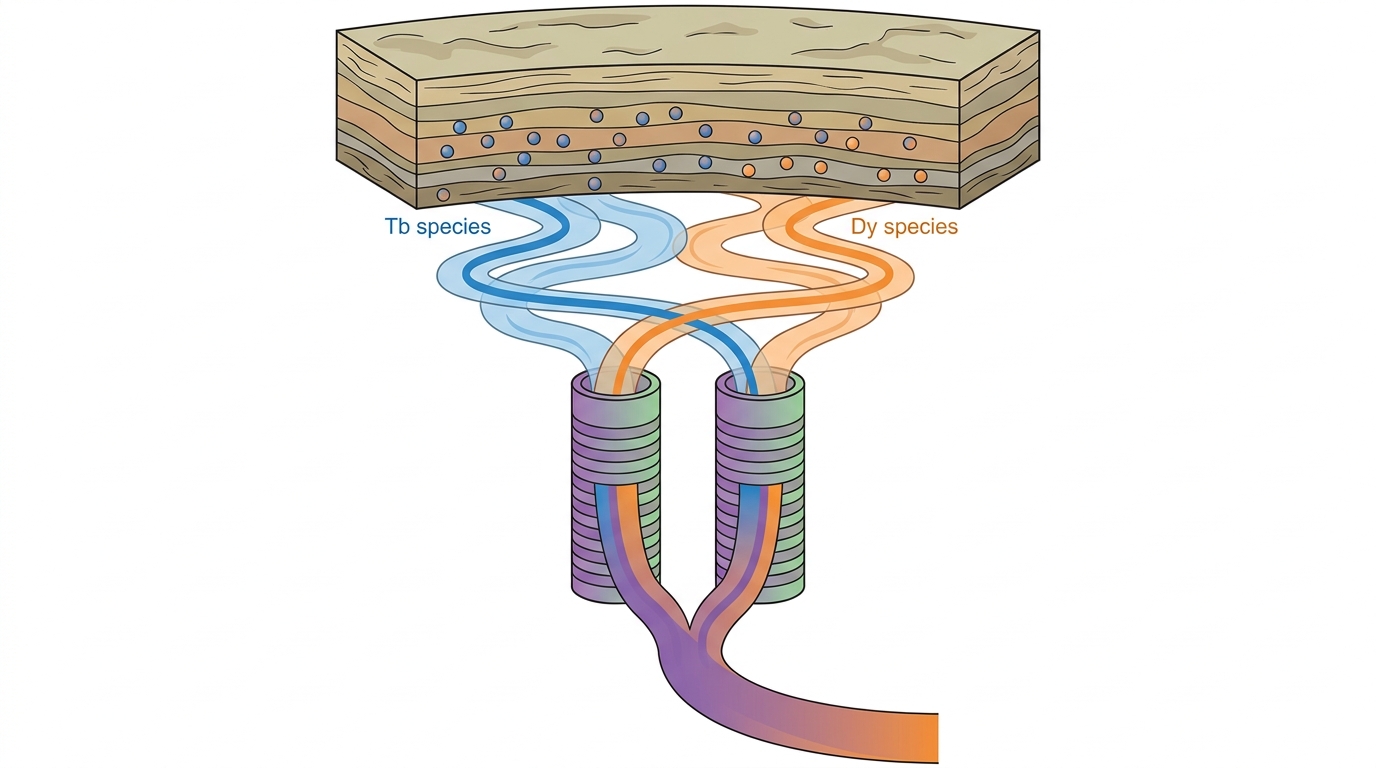
    In rare earth supply reviews, the first discovery is often physical rather than chemical: end-of-life products rarely appear as a clean, labeled magnet stream. A hard disk drive may yield a recognizable NdFeB magnet, while mixed electronics often arrive shredded, glued, coated, and undocumented. That gap between theoretical metal content and usable feedstock explains both the appeal and the frustration of rare earth recycling. For professional due-diligence work in rare earths and magnet metals, including family-office research functions, private-wealth due-diligence teams, OEM sourcing groups, and industrial strategy desks, recycling is best understood as a risk-mitigation layer rather than a full substitute for primary mining.

    Key takeaways

    • Rare earth recycling is technically feasible, especially for NdFeB recycling from magnets, but feedstock quality and collection control usually matter more than headline recovery rates.
    • Industrial scrap and clearly identified magnet waste tend to be the most reliable recycling streams; dispersed consumer electronics remain the hardest to aggregate and sort.
    • Urban mining can diversify NdPr supply over time, yet near-term dysprosium recycling and terbium recovery remain constrained by low concentrations, separation complexity, and limited end-of-life volume.
    • Wind turbines and EV motors represent meaningful future feedstock, but much of that volume arrives later, as fleets age and repowering cycles accelerate after 2030.
    • Traceability, mass balance, and downstream refining capacity often determine whether a recycling claim is operationally credible.

    Where the urban mine is real

    The urban mine for rare earths is not a single pool of material. It is a patchwork of waste streams with very different handling requirements. The most relevant sources for rare earth recycling are permanent magnets recovered from decommissioned hard disk drives, speakers, headphones, industrial motors, and manufacturing scrap; EV motors and powertrains that reach end of life as the fleet ages; wind turbine generators removed during repowering or decommissioning; phosphor-bearing fluorescent and LED lighting; and smaller amounts embedded in smartphones, digital cameras, and other consumer electronics. Industrial scrap usually stands apart because composition is better known and the material is already concentrated.

    Scale looks compelling on paper. Wind turbines can contain roughly 600 to 2,000 kilograms of permanent magnet material per unit, and EV traction motors commonly carry around 1 to 3 kilograms of magnet material. Yet availability in a spreadsheet is not the same as availability at a recycler gate. Global rare earth recycling is still often cited at roughly 1% of supply, and only about one-fifth of e-waste is collected and recycled at all. In practice, urban mining rare earths works best when the stream is concentrated, identifiable, and physically recoverable without destroying the magnet before separation begins.

    Can rare earth magnets be recycled?

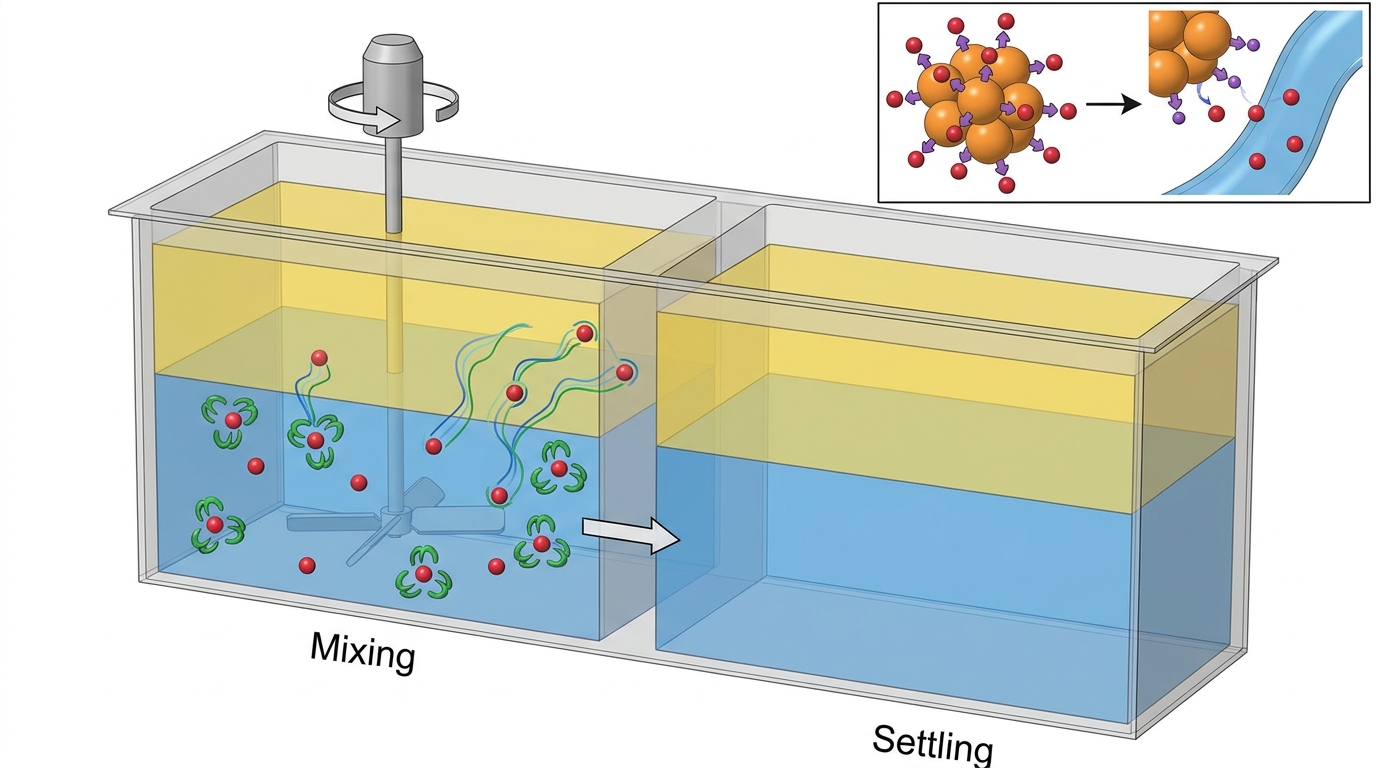
    Yes. Permanent magnets can be recycled through two broad routes. The first is direct or “magnet-to-magnet” recycling, where NdFeB magnet material is recovered, cleaned, degaussed, processed, and reintroduced into magnet manufacturing with limited chemical breakdown. This route can preserve alloy value and reduce some processing intensity when magnet grade is known and contamination is controlled. The second route is hydrometallurgical processing, where the magnet is dissolved and the rare earth elements are separated chemically into purified streams such as neodymium, praseodymium, dysprosium, and terbium.

    Each route carries trade-offs. Direct recycling is attractive for homogeneous production scrap and clearly identified returned magnets, but mixed grades, nickel coatings, copper layers, epoxy, oxidation, and adhesive residues can quickly degrade the result. Hydrometallurgy is more flexible when feedstock is dirty or mixed, and it can produce high-purity separated material, but it adds reagent handling, residue treatment, and tighter chain-of-custody demands. One recurring discovery in recycling assessments is that shredding simplifies bulk e-waste handling while simultaneously destroying the identity of the most valuable magnet-bearing components. Once that identity is lost, recovery becomes a chemistry problem instead of a controlled materials problem.

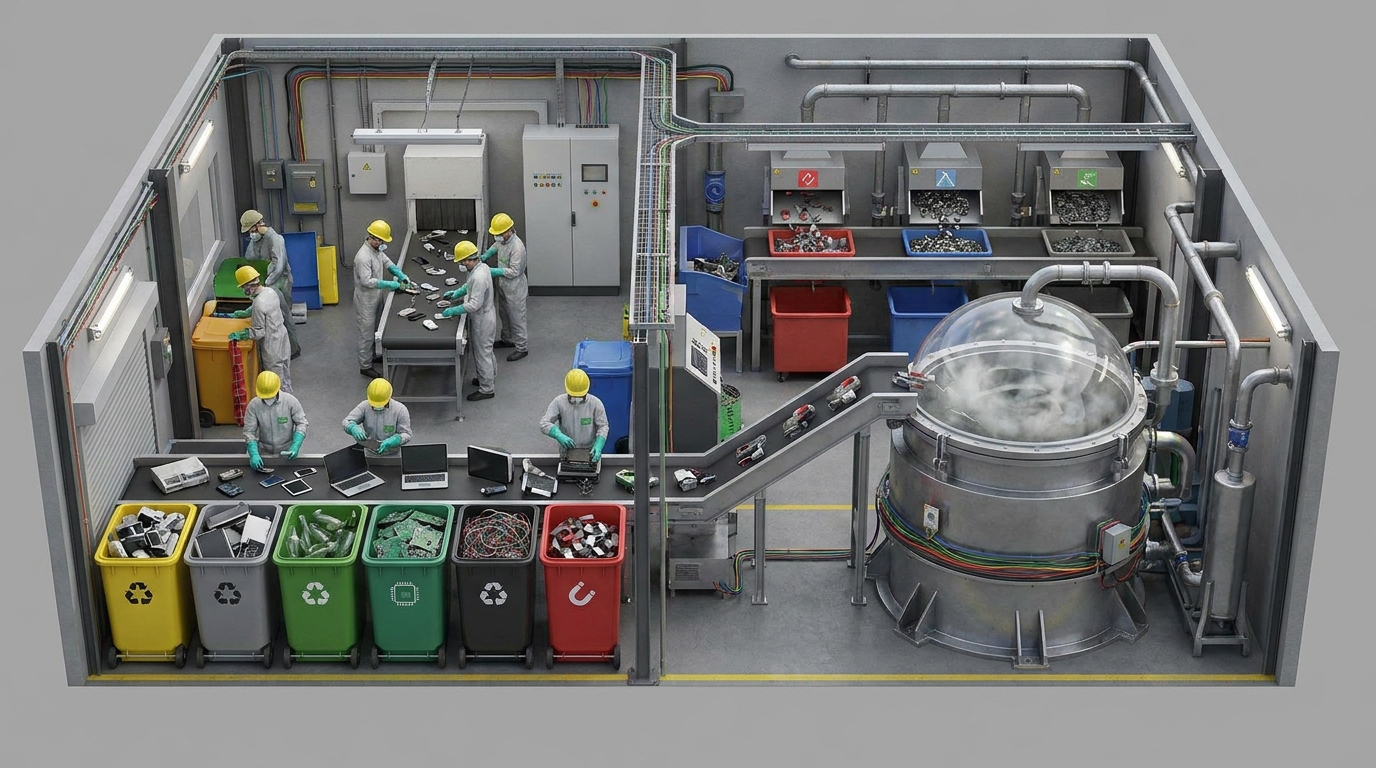
    Urban mining pipeline from e-waste collection to magnet separation (illustrative).
    Urban mining pipeline from e-waste collection to magnet separation (illustrative).

    Why is rare earth recycling still small?

    The limiting factor is usually not laboratory chemistry. It is the feedstock system around the chemistry. Collection remains fragmented across jurisdictions, product categories, and disposal habits. Rare earth-bearing goods are often discarded as part of larger equipment assemblies, and the magnet is rarely tracked as a separate component. Under the EU WEEE regime, collection and recycling targets exist for broad equipment categories, but rare earth recovery has historically not been the central design feature. As a result, much collected material enters bulk metal recovery pathways rather than dedicated rare earth separation.

    Disassembly adds another bottleneck. Consumer devices hide tiny magnets in compact assemblies. EV motors can require specialist teardown. Wind turbine generators contain larger and more accessible magnet masses, yet logistics, handling, and degaussing introduce their own operational burden. In higher-cost jurisdictions, manual separation can absorb much of the value before refining begins. Traceability is another frequent weak point. Credible recycling claims are usually supported by some combination of bill-of-materials data, teardown protocols, serial-number linkage, assay reports, mass-balance records, and downstream refining certificates. When those records are thin, “recycled rare earth” can mean almost anything from clean production scrap to low-grade mixed residues.

    The economics gap: where claims often break down

    Economics in magnet recycling are strongest when feedstock is concentrated, known, and already inside an industrial loop. They weaken when the stream is dispersed, contaminated, or compositionally uncertain. Recovery percentage on its own is rarely enough to establish commercial relevance. The more important question is whether the recovered output can return to the magnet value chain in a specification that alloy makers and magnet manufacturers can actually use. A process that produces a mixed rare earth concentrate or low-value chemical intermediate may recover metal, but it does not necessarily reduce strategic supply risk in the same way as qualified magnet feedstock.

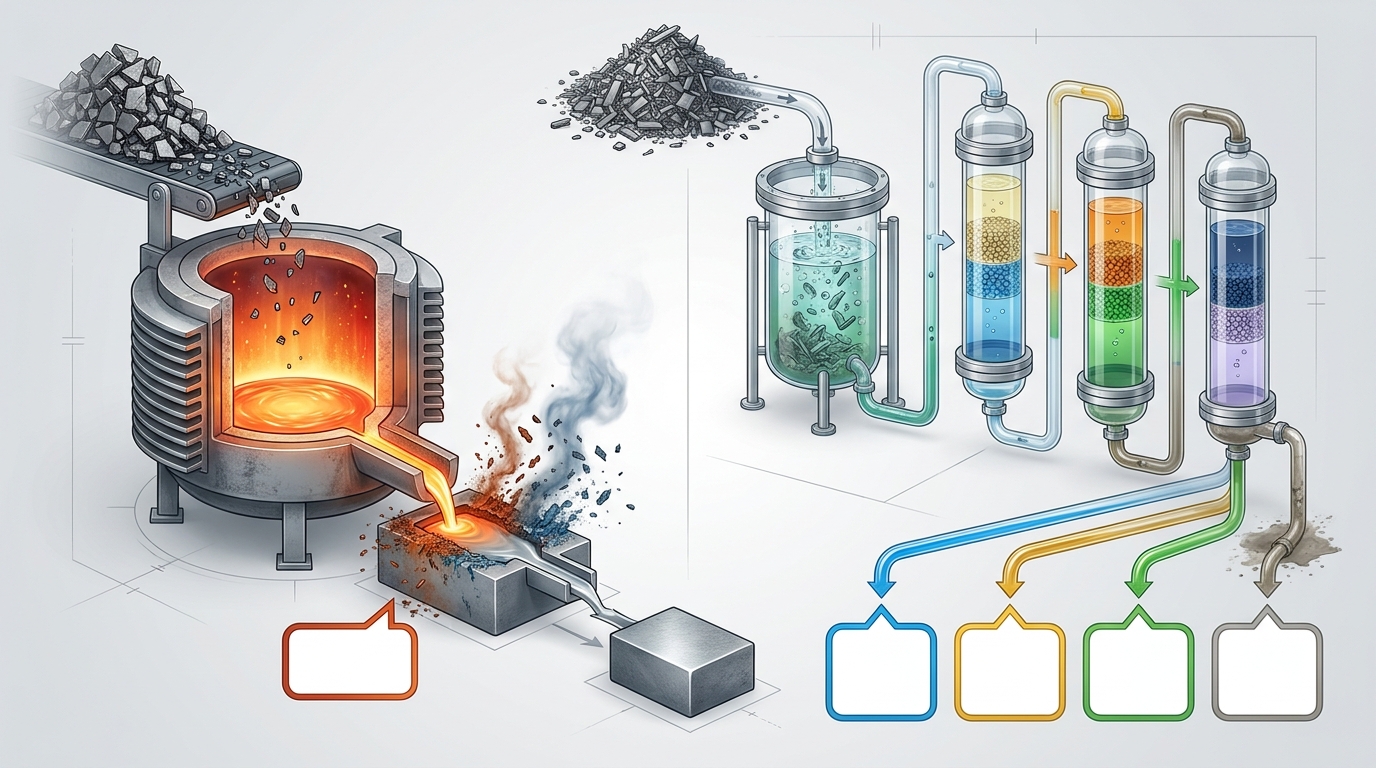
    Side-by-side comparison of direct remelting vs hydrometallurgical recovery.
    Side-by-side comparison of direct remelting vs hydrometallurgical recovery.
    • Observed failure mode: feedstock mismatch. A plant designed for clean NdFeB scrap receives mixed e-waste fractions with coatings, ferrites, and non-magnet metals.
    • Observed failure mode: traceability dilution. Material from multiple collectors is blended before grade confirmation, obscuring provenance and mass balance.
    • Observed failure mode: downstream gap. Separated rare earth salts are produced, but local alloying or magnet-making capacity is absent, leaving the recycling loop incomplete.
    • Observed failure mode: heavy rare earth overstatement. Marketing emphasizes dysprosium and terbium recovery even when the actual end-of-life feed is dominated by low-Dy consumer or industrial magnet streams.

    Why dysprosium and terbium remain the hard part

    NdPr recovery is the visible part of the recycling story because neodymium-praseodymium dominates most permanent magnet applications. Dysprosium and terbium are harder. They are critical for high-temperature magnet performance, but end-of-life magnets often contain them in comparatively small amounts. Many consumer electronics magnets contain little or no meaningful heavy rare earth loading, and even in EV applications the Dy share is often modest. That means a large quantity of end-of-life material may still yield a limited amount of dysprosium or terbium, while the chemical separation burden remains high.

    This is why recycling can support diversification without resolving near-term heavy rare earth risk. The most meaningful future feedstock for Dy and Tb sits in larger traction motors and wind turbine generators, and much of that stream becomes available only as assets are retired in larger numbers after 2030. Wind remains important because a single turbine can contain a substantial mass of permanent magnet material, but the timing of decommissioning, the magnet architecture, and the physical route from removal to controlled processing all determine real recoverability. In short, dysprosium recycling is technically possible, but operational scale is still emerging.

    Compliance, jurisdiction, and refining geography

    Geography matters twice in rare earth recycling: once at waste collection and again at refining. The EU has moved from general e-waste management toward more explicit strategic raw material thinking through the Critical Raw Materials Act, while WEEE rules continue to shape collection behavior. At the same time, China remains dominant across mining, separation, and magnet manufacturing, which means recycled oxide or salt produced elsewhere may still depend on Chinese refining or magnet conversion capacity unless domestic alloying and sintering lines are in place. That geographical dependence can leave a recycling project exposed even when collection is local.

    Transboundary shipment rules, hazardous residue classification, and documentation quality also affect operational resilience. A recycler handling fluorescent phosphors, mixed electronics, and magnet scrap may face very different compliance burdens across those streams. Recent sector developments point toward more specialized facilities, more interest in domestic magnet loops, and stronger scrutiny of provenance claims. The pattern is clear: recycling is becoming more strategic, but the sector still rewards operational specificity over broad narrative.

    Why NdPr is more prevalent and Dy/Tb are harder to recover (conceptual).
    Why NdPr is more prevalent and Dy/Tb are harder to recover (conceptual).

    A practical due-diligence frame for recycling claims

    In practice, a recycling review often separates five questions. First, what exactly is the feedstock: production scrap, returned magnets, motors, turbines, or mixed e-waste? Second, how controlled is collection: contracted industrial scrap, municipal waste, or third-party aggregators? Third, which process route is used: direct magnet recycling, hydrometallurgy, or a hybrid? Fourth, how is traceability maintained across receipt, assay, separation, and sale? Fifth, what is the final product: reusable NdFeB alloy input, separated oxides, salts, or a lower-value mixed intermediate?

    Across the global market, the most credible risk-mitigation models tend to be the least glamorous. Clean industrial scrap loops, degaussed hard-disk-drive magnets, and clearly identified manufacturing returns usually outperform diffuse consumer collection in both traceability and recovery quality. EV motor and wind turbine recycling remain strategically important because they represent future scale, yet their strongest contribution is likely to appear gradually as asset retirement volumes build. Recycling so sits as a genuine diversification tool within rare earth supply chains, especially for NdPr, while primary mining and separation still carry most of the burden for near-term dysprosium and terbium availability.

    For Procyon Metals, the central analytical question is not whether recycling works in principle. It is where a given recycling claim sits on the spectrum between clean industrial-loop recovery and difficult mixed-waste recovery, and whether the evidence on feedstock control, process selection, traceability, and downstream conversion is strong enough to support the claim. Discussion of recycling claims and supply-chain due diligence in rare earths and magnet metals forms part of Procyon Metals’ ongoing work.

  • Rare-Earth-Free Motors After the 180 kW SynRM Milestone: Real Diversification or Expensive

    Rare-Earth-Free Motors After the 180 kW SynRM Milestone: Real Diversification or Expensive

    **Rare-earth-free motors are moving from concept to selective industrial reality, but substitution is narrowing rare-earth exposure rather than erasing it. Across EVs, industrial drives, and hybrid platforms, magnet-free and low-rare-earth designs introduce real supply-chain resilience at the cost of efficiency, packaging, copper intensity, control complexity, or thermal margin-leaving permanent magnet motors difficult to displace in the most demanding applications.**

    Rare-Earth-Free Motors and Low-Rare-Earth Designs: What the Engineering Reality Means for Strategic Metals Exposure

    This explainer is written for family offices, strategic-metals investors, and supply-chain risk teams following the global motor market through an industrial lens rather than a headline lens. The central point is straightforward. Rare earth free motors are no longer theoretical, and low-rare-earth designs are becoming materially more important, but the substitution story is not a simple march from permanent magnets to magnet free motors. It is a segmented redesign of the drivetrain landscape, shaped by torque density, thermal stability, efficiency across duty cycles, manufacturing complexity, and upstream concentration in rare-earth processing and magnet fabrication.

    That distinction matters because rare earth substitution is often presented as if one successful prototype can reset the entire demand picture for neodymium, praseodymium, or dysprosium. The operating evidence points elsewhere. In many end markets, especially compact high-performance electric traction, robotics, servo systems, and packaging-constrained industrial equipment, permanent magnet motors remain structurally advantaged. The debate is not whether alternatives exist. They do. The harder question is where the alternatives stay competitive once all losses, materials, controls, cooling demands, and reliability burdens are counted.

    Why the substitution debate has intensified

    The recent acceleration in rare-earth-free motor development is tied to a familiar industrial problem: concentrated midstream capacity. The bottleneck is not simply mine supply. It is separation, metal and alloy conversion, and magnet manufacturing. For traction systems built around NdFeB permanent magnets, supply resilience depends on a chain that runs from rare-earth oxides to alloying, sintering, machining, coating, and motor integration. A disruption in one part of that chain can travel quickly into automotive and industrial procurement.

    Publicly disclosed programs from Astemo, Valeo, and ABB show how manufacturers are trying to reduce that dependence in different ways. Astemo stated in October 2025 that it had achieved 180 kW output from a rare-earth-free main drive motor based on synchronous reluctance principles, with practical application targeted around 2030. Valeo has promoted an electrically excited synchronous motor, or EESM, with hairpin stator architecture, presenting it as a zero-rare-earth design and citing a lower motor-level carbon footprint versus conventional permanent magnet synchronous motors. ABB has advanced ferrite-assisted synchronous reluctance systems for industrial use. These are not identical technologies. They solve different problems under different operating constraints.

    Here is where the data becomes more useful than the headline. The market is not choosing between permanent magnet motors and one clean substitute. It is moving toward a layered architecture: high-NdPr motors in the most demanding applications, low-Dy magnets where heavy-rare-earth thrift is feasible, ferrite-assisted designs where size and efficiency penalties are manageable, and genuinely magnet-free machines where system-level trade-offs remain acceptable.

    What “rare-earth-free” actually means in motor design

    The phrase rare earth free motors covers several very different machine topologies. That matters because performance comparisons can become misleading when one architecture is judged only on peak power rather than on full duty-cycle behavior, thermal margin, or packaging.

    • Induction motors use a squirrel-cage rotor, typically aluminum or copper, and generate torque through induced rotor currents. They contain no permanent magnets.
    • Synchronous reluctance motors, or SynRM, rely on rotor saliency and magnetic reluctance differences rather than rotor magnets. They are magnet free by design.
    • Electrically excited synchronous motors, or EESM, replace permanent magnets with field windings energized electrically. They are magnet free, but not excitation free.
    • Ferrite-assisted motors use ferrite magnets instead of rare-earth magnets. They are not magnet free motors, but they are low-cost and non-rare-earth in the rotor magnet system.
    • Low-rare-earth magnets usually refer to NdFeB systems engineered to reduce heavy rare earth content, especially dysprosium, or to partially substitute more abundant rare earths such as cerium or lanthanum in less demanding applications.
    Architecture Rare-earth exposure Main strength Main limitation Typical fit
    Permanent magnet synchronous motor High to moderate, depending on magnet formulation Torque density, compactness, high efficiency Rare-earth and magnet supply-chain dependence EV traction, robotics, servo drives, compact industrial systems
    Induction motor None in rotor drive magnet system Mature, robust, no permanent magnets Rotor losses, cooling burden, lower efficiency in many duty cycles Industrial drives, some EV platforms, pumps and compressors
    SynRM / ferrite-assisted SynRM None to low No NdPr requirement or reduced magnet intensity Control complexity, lower torque density, acoustic and thermal challenges Industrial systems, selected hybrid and EV platforms
    EESM None in main rotor magnet system Eliminates permanent magnets, tunable field strength Field excitation losses, added copper and rotor complexity Selected automotive and industrial applications

    Why permanent magnet motors remain difficult to replace

    Permanent magnet motors remain hard to displace for a simple physical reason: they place a strong magnetic field in the rotor without continuous electrical excitation. That eliminates field-current losses and supports high torque density in a compact envelope. The result is not just better headline efficiency. It is easier packaging, lower rotor heating, simpler cooling loads at equivalent output, and strong performance across a wide operating map.

    General engineering literature, echoed in the research brief, places ferrite magnetic energy density at roughly 200 to 250 kJ/m³, compared with around 240 to 400 kJ/m³ for neodymium-based magnets depending on grade. That gap is one reason ferrite alternatives often need a larger magnetic circuit to reach similar torque. More volume means more mass, tighter packaging pressure, and frequently a wider penalty across rotor design, cooling jacket geometry, and vehicle integration. In compact traction systems, the penalty compounds quickly.

    The substitution debate is often framed as magnets versus no magnets. The engineering reality is harsher: losses never disappear; they migrate. A motor can remove NdPr from the rotor and still become more metal-intensive elsewhere, with more copper in field windings, more electrical steel in the magnetic path, more inverter sophistication, and more aggressive cooling hardware. That does not invalidate substitution. It simply defines its cost.

    Heavy rare earths deepen the picture. Dysprosium is often added to improve coercivity and protect magnet performance at elevated temperature, but that comes with supply-chain exposure and a magnet-property trade-off of its own. Low-Dy or Dy-thrift magnet strategies therefore matter enormously. They do not create rare earth free motors, but they reduce one of the most operationally sensitive inputs while preserving much of the permanent magnet architecture that OEMs already know how to industrialize.

    The commercially credible rare-earth-free pathways

    Induction motors: the mature magnet-free benchmark

    Induction motors are the most established rare-earth-free alternative. The rotor contains no permanent magnets, and the manufacturing base is well understood globally. That maturity is the attraction. The limitation is equally familiar: rotor current generates heat. Those I²R losses reduce efficiency, especially outside optimized operating points, and they impose a cooling burden that becomes more consequential in compact vehicle traction. Induction machines remain credible where robustness and magnet independence rank above absolute torque density, but they rarely erase the packaging advantage of permanent magnet motors.

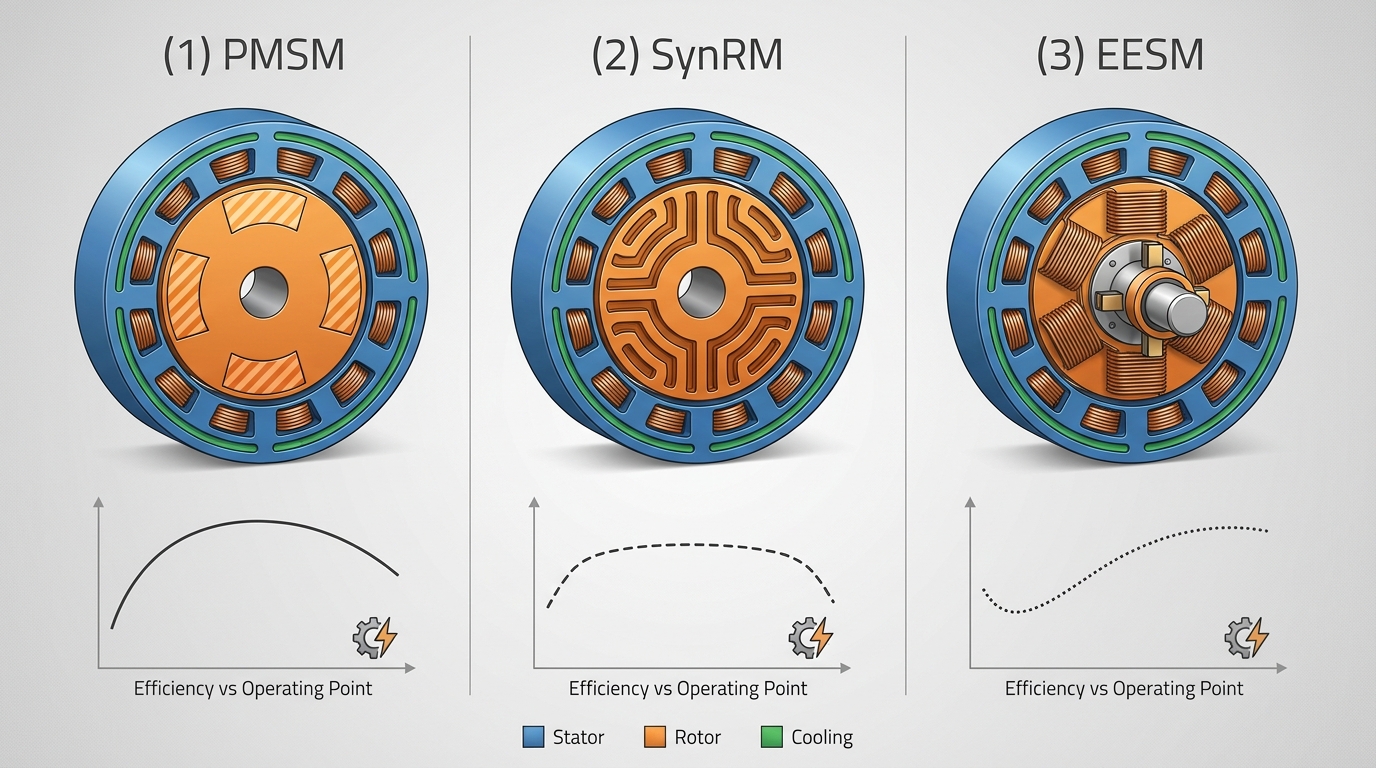
    Visual comparison of rare-earth-dependent vs rare-earth-free motor architectures and where performance trade-offs emerge.
    Visual comparison of rare-earth-dependent vs rare-earth-free motor architectures and where performance trade-offs emerge.

    Synchronous reluctance motors: credible, but highly geometry-dependent

    SynRM architectures generate torque from the rotor’s tendency to align along the path of least magnetic reluctance. In plain terms, the rotor geometry does much of the work. That sounds elegant, and in many industrial settings it is. But the geometry also makes the design sensitive to rotor lamination quality, control strategy, vibration behavior, and partial-load performance. Public statements from Astemo indicate that a rare-earth-free SynRM-based main drive motor has reached 180 kW output, with practical application envisioned around 2030. The milestone is significant because it demonstrates that magnet-free automotive traction is not confined to niche laboratory work. The constraint is that scaling from demonstrated output to broad, mass-market deployment is a manufacturing and system-integration challenge, not just a physics exercise.

    Ferrite-assisted SynRM designs improve the picture by adding low-cost non-rare-earth magnets to the rotor. ABB’s industrial work is relevant here. Ferrite assistance can raise efficiency and torque density over a pure SynRM, but the magnet strength remains lower than NdFeB, so the architecture still relies on careful control and often accepts a size or mass trade-off. This is one of the more important nuances in the market. Some “rare-earth-free” narratives are actually “rare-earth-free but not magnet-free,” and that distinction directly affects bill-of-material resilience.

    Electrically excited synchronous motors: magnet-free, copper-heavier, control-heavier

    EESM designs eliminate permanent magnets by energizing a rotor field winding. Valeo has presented this route with a hairpin stator, claiming a lower carbon footprint at motor level versus conventional permanent magnet machines and higher power density versus earlier EESM generations. The engineering logic is sound. Hairpin stators can raise slot fill and improve heat management in the stator. Even so, the machine still needs field excitation. That means electrical energy is continuously allocated to maintaining the rotor field, and the machine inherits extra copper demand, rotor winding complexity, and potential reliability sensitivities around excitation hardware, insulation systems, and thermal management.

    This is the second critical insight. Permanent magnets remain difficult to replace not because alternatives are absent, but because permanent magnet machines compress torque, efficiency, and packaging into one architecture with very few moving trade-offs. EESM and SynRM can be highly effective. They simply move the compromise elsewhere.

    Low-rare-earth designs may matter more than “magnet-free” headlines

    The most underestimated resilience pathway in the market is not total magnet elimination. It is material thrift inside the permanent magnet family. Low rare earth magnets can take several forms: reduced dysprosium content through better grain-boundary engineering, better cooling strategies that lower rotor temperature exposure, selective use of terbium or alternative microstructural treatments in demanding zones, and partial substitution with more abundant rare earths in applications with looser thermal or torque requirements.

    This matters because dysprosium exposure is not the same as NdPr exposure. A motor program that materially lowers heavy-rare-earth intensity can still preserve the compactness and efficiency of a permanent magnet motor while improving supply resilience. For strategic-metals analysis, that is not a side note. It is a separate demand outcome. A world with more low-Dy permanent magnet motors is not a world without rare-earth demand. It is a world with a different composition of rare-earth demand and a different sensitivity to thermal-grade magnet capacity.

    Some formulations also explore partial cerium or lanthanum substitution. These routes can lower cost pressure and diversify feedstock usage, but they generally carry performance penalties that confine them to less demanding duty cycles. Again, the pattern is consistent. Rare earth substitution is real, but it is segmented. High-end traction, precision servos, and compact direct-drive systems are not governed by the same trade-offs as auxiliary pumps or standard industrial drives.

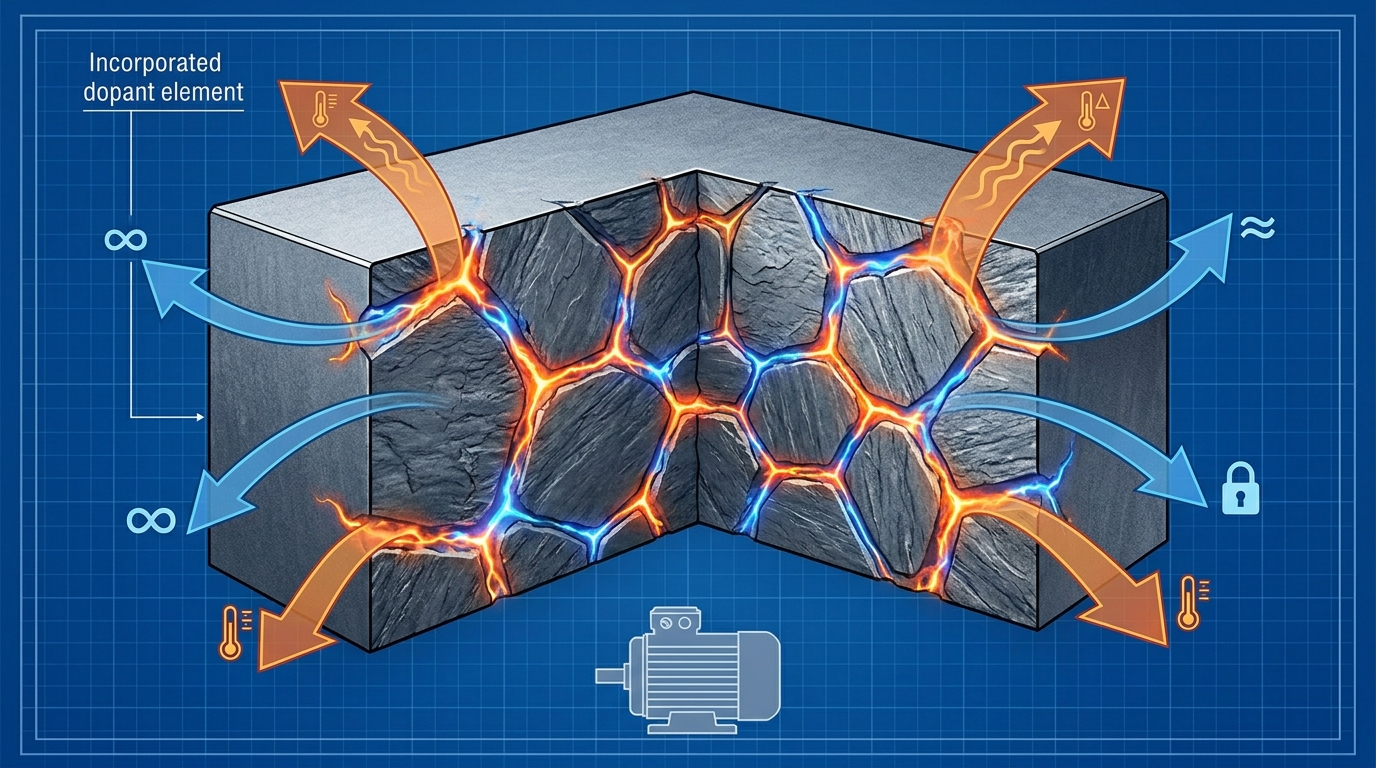
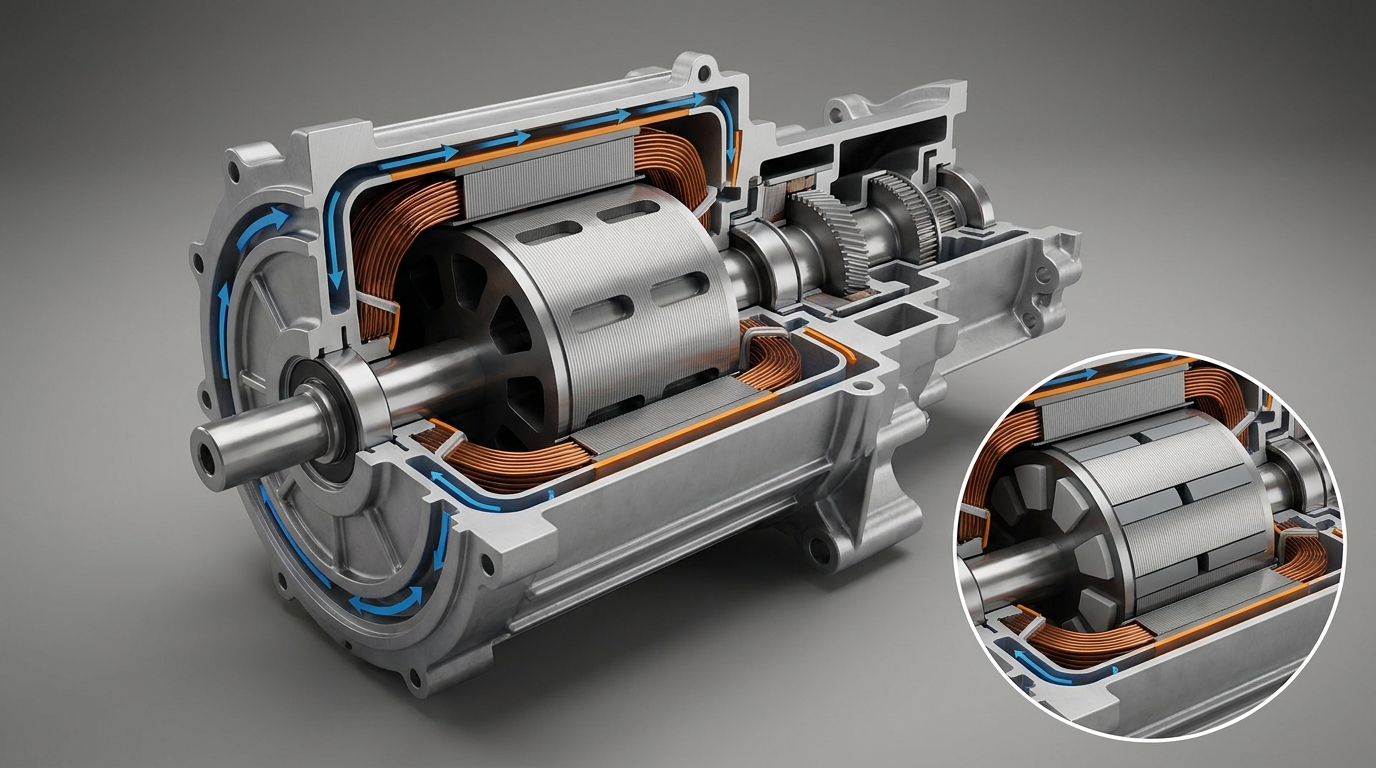
    Illustrated cross-section highlighting structural differences and thermal/cooling features.
    Illustrated cross-section highlighting structural differences and thermal/cooling features.

    Where substitution works, and where it becomes expensive insurance

    Substitution works best when the operating envelope is narrow, the packaging envelope is forgiving, and the system can tolerate either more mass, more copper, more control sophistication, or somewhat lower partial-load efficiency. That makes industrial drives, commercial vehicles on predictable duty cycles, and some hybrid architectures the leading candidates. In these settings, SynRM, ferrite-assisted machines, and selected EESM configurations can reduce rare-earth exposure without breaking the application.

    Hybrid electric vehicles are a particularly important middle ground. The electric machine is not always asked to deliver the entire propulsion burden, which eases some efficiency and packaging constraints. Ferrite-based designs and reluctance-based systems can therefore make more sense than they do in battery-electric platforms that rely on electric traction continuously. Commercial vehicles present another case where duty-cycle predictability can support alternative topologies, especially when routing, load profiles, and cooling systems are already tightly engineered.

    The hardest territory remains the compact, efficiency-sensitive, thermally demanding application set. Premium battery-electric platforms, precision robotics, servo drives, drones, and other systems where every kilogram and every cubic centimeter counts continue to favor permanent magnet motors. In those systems, rare-earth-free designs can function as expensive insurance against supply disruption. They are technically valid, but the premium is paid through packaging penalty, lower efficiency at key duty points, more complicated control, or more difficult thermal management. That is not a universal rejection of substitution. It is a reminder that substitution has an industrial price, even when headline material exposure declines.

    What this means for rare-earth demand resilience globally

    The strongest conclusion from the current evidence is that rare-earth-free motors reduce demand concentration in selected applications, but they do not eliminate magnet metal demand. Even if magnet-free traction gains meaningful share over time, several sources of residual demand remain: permanent magnet motors in premium or packaging-constrained platforms, auxiliary vehicle systems, robotics, industrial servos, wind systems, compressors, and a wide range of electronic and electromechanical assemblies that still value NdFeB performance.

    There is also a supply-chain substitution effect. When a manufacturer moves away from permanent magnets, the dependency does not vanish. It shifts toward copper, electrical steel, ferrite supply, power electronics, software calibration, and specialized manufacturing tolerances. In some cases, the rare-earth bottleneck is exchanged for a different bottleneck in conductor quality, insulation endurance, or inverter capability. From a resilience standpoint, that can still be rational. From a demand-destruction standpoint, it is much less dramatic than the headline “magnet free” suggests.

    Widely cited industry estimates summarized in the research brief place China at roughly 70% of global rare-earth processing and about 60% of primary production. Those figures help explain the urgency behind substitution programs, but they do not automatically translate into a collapse of rare-earth dependence. The practical market outcome is more likely a bifurcation. One part of the motor market leans harder into rare-earth-free or low-rare-earth architectures for resilience. Another part continues to pay for permanent magnet performance because the alternatives remain too large, too lossy, or too operationally complex.

    This is the third insight worth isolating. The relevant question is not whether rare earth free motors exist. The relevant question is how much rare-earth intensity can be removed before the application starts paying for that resilience somewhere else in the system. In many sectors, the answer is “some, but not all.” That is why permanent magnet demand can remain resilient even as substitution headlines multiply.

    Implementation, maintenance, and compliance constraints

    Motor substitution is not only a materials question. It is a manufacturing and operations question. SynRM designs depend heavily on rotor lamination precision, electromagnetic modeling, inverter tuning, and noise-vibration-harshness control. EESM platforms add rotor winding and excitation complexity, which can introduce different reliability modes than a permanent magnet rotor. Induction motors place more attention on rotor heating and cooling design. None of these constraints is fatal. All of them affect industrialization speed.

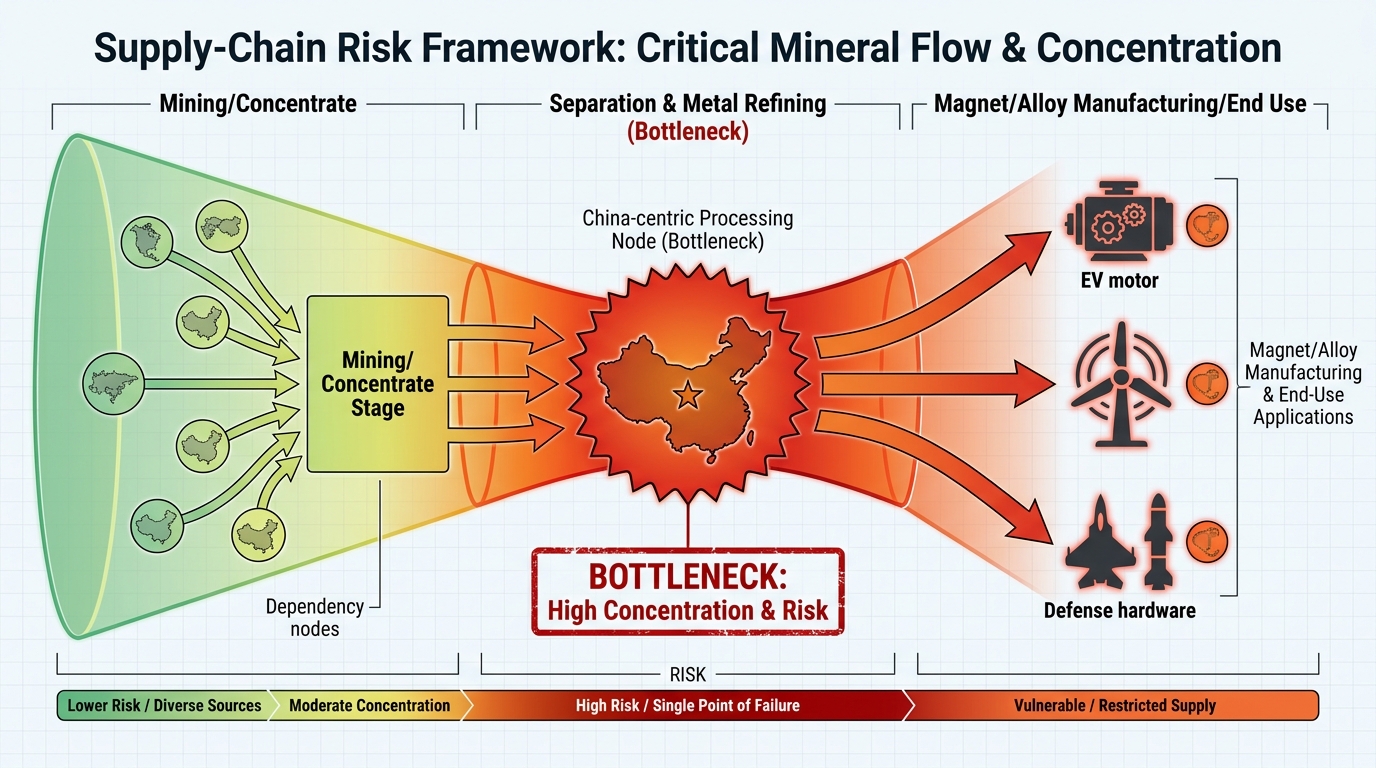
    Supply-chain flow model showing diversification but not elimination of rare-earth dependence.
    Supply-chain flow model showing diversification but not elimination of rare-earth dependence.

    Compliance also shifts. Rare-earth-free systems can ease concerns around critical minerals exposure and, in some jurisdictions, simplify end-of-life handling by removing the need for permanent magnet recovery. At the same time, higher copper content, different insulation systems, and more demanding thermal cycles raise separate questions for lifecycle qualification and maintenance. A rare-earth-free motor may reduce one class of supply-chain risk while introducing a more exacting reliability validation program on another axis.

    This connects directly to cost. Public announcements emphasize technical achievement, but manufacturing economics are less transparent. Tooling, rotor complexity, winding processes, control software calibration, and validation time all influence whether a rare-earth-free solution is a broad market answer or a selective hedge. In practice, some motor architectures will remain highly application-specific for years because qualification effort is as real a barrier as materials availability.

    Observed market configurations rather than a single end state

    The most realistic global picture is not total replacement, but coexistence. One observed configuration is the performance-led platform that keeps permanent magnets and reduces heavy-rare-earth intensity through material optimization. Another is the resilience-led platform that accepts a magnet-free or ferrite-assisted design where packaging and duty cycle permit. A third is the mixed portfolio, common in large OEMs and industrial groups, where different motor topologies are assigned to different products rather than imposed across the entire range.

    That portfolio logic is exactly why rare-earth demand resilience can persist even while substitution advances. The motor market is too heterogeneous for a single topology to dominate every application. The companies most vocal about substitution are often the same companies maintaining multiple architecture pathways at once. That is not inconsistency. It is industrial realism.

    FAQ: Can EV motors avoid rare earths

    Yes, some EV motors can avoid rare earths. Induction motors, synchronous reluctance motors, and electrically excited synchronous motors are all credible pathways for eliminating rare-earth permanent magnets from the main traction motor. Publicly discussed programs from Astemo and Valeo demonstrate that automotive-grade development is active and technically serious. The limit is not basic feasibility. The limit is application fit. Once packaging, efficiency over real drive cycles, cooling burden, mass, and manufacturing complexity are factored in, rare-earth-free traction becomes more compelling in some vehicle segments than in others. The conclusion is selective viability, not universal replacement.

    FAQ: Do rare-earth-free motors eliminate magnet metal demand

    No. Rare-earth-free motors do not eliminate magnet metal demand at system level or market level. First, many vehicles and industrial systems still retain permanent magnets in auxiliary motors, sensors, actuators, and non-traction subsystems. Second, ferrite-assisted machines still use magnets, even if they avoid rare earths. Third, many high-performance applications continue to favor permanent magnet motors because torque density and compactness remain decisive. The demand effect is therefore dilution and redistribution, not removal. For NdPr and dysprosium analysis, that distinction is fundamental.

    Note on Procyon methodology Procyon Metals cross-references trade-policy signals, including export-control and administrative notices such as MOFCOM actions when relevant, with disclosed OEM engineering claims and the end-use performance specifications that actually govern adoption. That approach matters because market narratives around rare earth substitution often outrun the thermal, packaging, and reliability limits embedded in the final application.

    Conclusion

    Rare earth free motors are real, low-rare-earth designs are becoming more sophisticated, and the motor market is clearly diversifying. But diversification is not the same as displacement. In the applications that matter most for torque density, compact packaging, and efficiency across demanding duty cycles, permanent magnet motors remain unusually hard to replace, while low-Dy and other thrift strategies may prove more consequential than magnet-free headlines suggest.

    For family offices, strategic-metals investors, and industrial counterparties mapping continuity risk rather than chasing simplistic substitution narratives, the operative framework is exposure redistribution across motor architectures, materials, and operating constraints. Procyon Metals is available to discuss rare earth exposure scenarios across rare earth free motors, magnet free motors, permanent magnet motors, and low rare earth magnets, supported by active monitoring of weak signals that will define the next phase.

  • US and EU Rare Earth Projects: A Supply-Chain Risk Framework for Reading Mine-to-Magnet

    US and EU Rare Earth Projects: A Supply-Chain Risk Framework for Reading Mine-to-Magnet

    Across the US and Europe, rare earth project headlines now span mines, solvent-extraction plants, oxide capacity, metal conversion, alloy production, magnet manufacturing, recycling, and public-policy support. In operating reviews, the first discovery moment often appears early: a “rare earth supply” announcement describes only ore, concentrate, or mixed carbonate, while rare earth separation, metal-making, or magnet conversion remains external, conceptual, or dependent on another jurisdiction. That gap between headline scope and deliverable scope is the central issue in rare earth projects due diligence.

    Key Takeaways

    • Mine output and magnet supply are different industrial stages with different equipment, permits, qualification cycles, and failure modes.
    • The strongest US rare earth supply chain and EU critical raw materials announcements usually specify product form, plant location, downstream dependencies, and documentary status rather than broad tonnage language alone.
    • Rare earth separation is frequently the real bottleneck, especially where feed mineralogy, waste handling, radiological controls, and solvent-extraction know-how are unresolved.
    • Metal-making, alloying, and magnet manufacturing introduce separate purity, ppm impurity control, and customer-qualification risks even after oxide production is established.
    • Public support mechanisms, financing packages, and offtake announcements can improve visibility, but they do not erase permitting, commissioning, logistics, or technical scale-up risk.

    Why Mining Is Not the Same as Magnet Supply

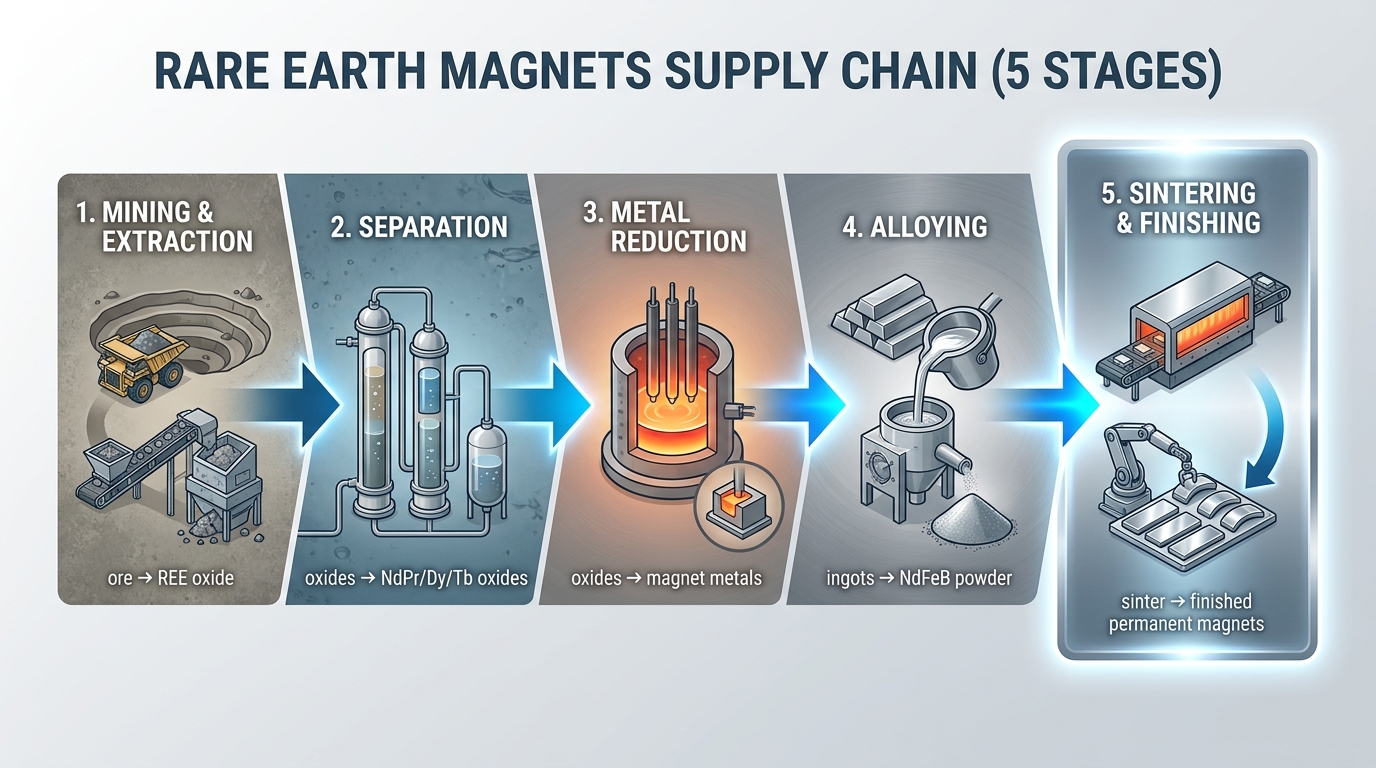
    Rare earth supply chains are sequential. Mining and beneficiation generate ore or concentrate, often described through TREO, or total rare earth oxide content. Separation then isolates individual oxides such as NdPr oxide, dysprosium oxide, or terbium oxide through complex chemical processing, typically using solvent extraction. Metal-making reduces those oxides into metal. Alloy production prepares feed for magnet manufacture. Magnet manufacturing itself adds powder handling, pressing, sintering, machining, coating, and end-customer qualification. A project can be successful at one stage and still leave the overall chain exposed.

    This distinction matters because the strategic concern in Western announcements is rarely simple ore availability. The pressure point is much more often the ability to turn a mined material into specification-grade oxides, metals, alloys, and finished magnets inside reliable jurisdictions. In practice, a mine in the US with separation in a second country, alloy conversion in a third, and magnet manufacturing in a fourth still carries route risk, export-control risk, customs friction, traceability complexity, and schedule risk at every handoff.

    A second discovery moment often emerges when “integrated” is used loosely. In some announcements, integration means a conceptual ambition across the value chain. In operational terms, integration means named plants, defined feedstock, tested flowsheets, qualified outputs, environmental permissions, and realistic handoff between stages. That distinction is easy to miss in headline reading and becomes obvious only when the value chain is mapped stage by stage.

    A Practical Scope for Rare Earth Projects Due Diligence

    A durable review framework usually begins with a narrow question: what exactly is being produced, where, and in what chemical or metallurgical form? Public announcements often compress several stages into one phrase such as “rare earth materials” or “magnet supply.” Analytical work becomes clearer when the output is identified precisely as concentrate, mixed rare earth carbonate, separated oxide, metal, alloy, magnet alloy feed, or finished magnet.

    • Feedstock definition: deposit type, mineralogy, and whether the project is oriented toward light rare earths or includes meaningful heavy rare earth exposure.
    • Process definition: beneficiation route, rare earth separation method, metal reduction route, alloy preparation, and whether magnet manufacturing is included or external.
    • Product definition: which oxides or metals are planned, what purity is stated, and whether impurity control is discussed in ppm where relevant.
    • Location map: mine, separation plant, metal plant, alloy site, magnet plant, recycling unit, storage, and shipping route by jurisdiction.
    • Document set: pilot data, qualification data, environmental filings, water rights, waste permits, radiological handling plans, and customer testing evidence.

    The documentary layer often reveals more than the headline. A resource statement without a flowsheet says little about recoverable, saleable product. A separation concept without pilot-scale evidence says little about solvent balance, waste chemistry, or actual oxide purity. A magnet manufacturing line without named alloy feed or customer qualification says little about commercial usability. In other words, the useful unit of analysis is not headline capacity but verified conversion from one stage to the next.

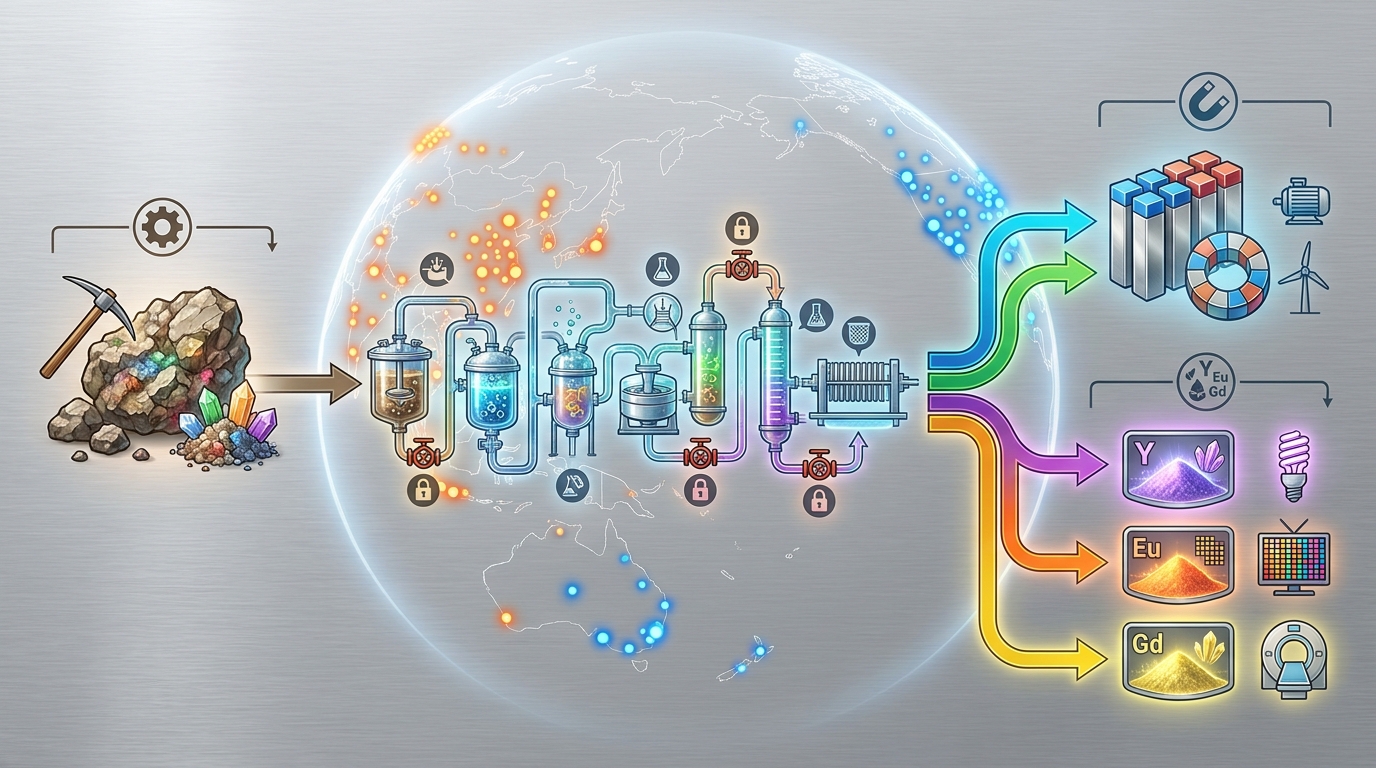
    Value-chain map from ore to finished magnets (no text).
    Value-chain map from ore to finished magnets (no text).

    Where the US and EU Value Chain Commonly Tightens

    For the US rare earth supply chain and for EU critical raw materials planning, separation remains the most common pressure point. Rare earth separation is chemically demanding, environmentally sensitive, and operationally unforgiving. Feed variability can alter recoveries. Waste streams can change permit complexity. Thorium or uranium association in certain mineral systems can widen the compliance burden. An announcement that treats separation as a routine add-on to mining usually understates the real bottleneck.

    Metal-making and alloying create a second, less visible bottleneck. Converting oxides to metal and then to magnet alloy is not a paperwork extension of separation. It is a distinct metallurgical capability with contamination control, oxygen management, process yield discipline, and customer qualification requirements. A plant may produce oxide successfully while still relying on imported metal or alloy feed. In practical terms, that means diversification remains partial rather than complete.

    Magnet manufacturing adds another layer. Finished NdFeB magnets require not only metallurgical feed but process repeatability, machining quality, coating reliability, and performance validation for automotive, industrial, clean-energy, semiconductor, or defense applications. Public announcements sometimes present a magnet line as the endpoint of resilience, but magnet plants are only as secure as their alloy inputs, technical labor base, and qualified demand profile.

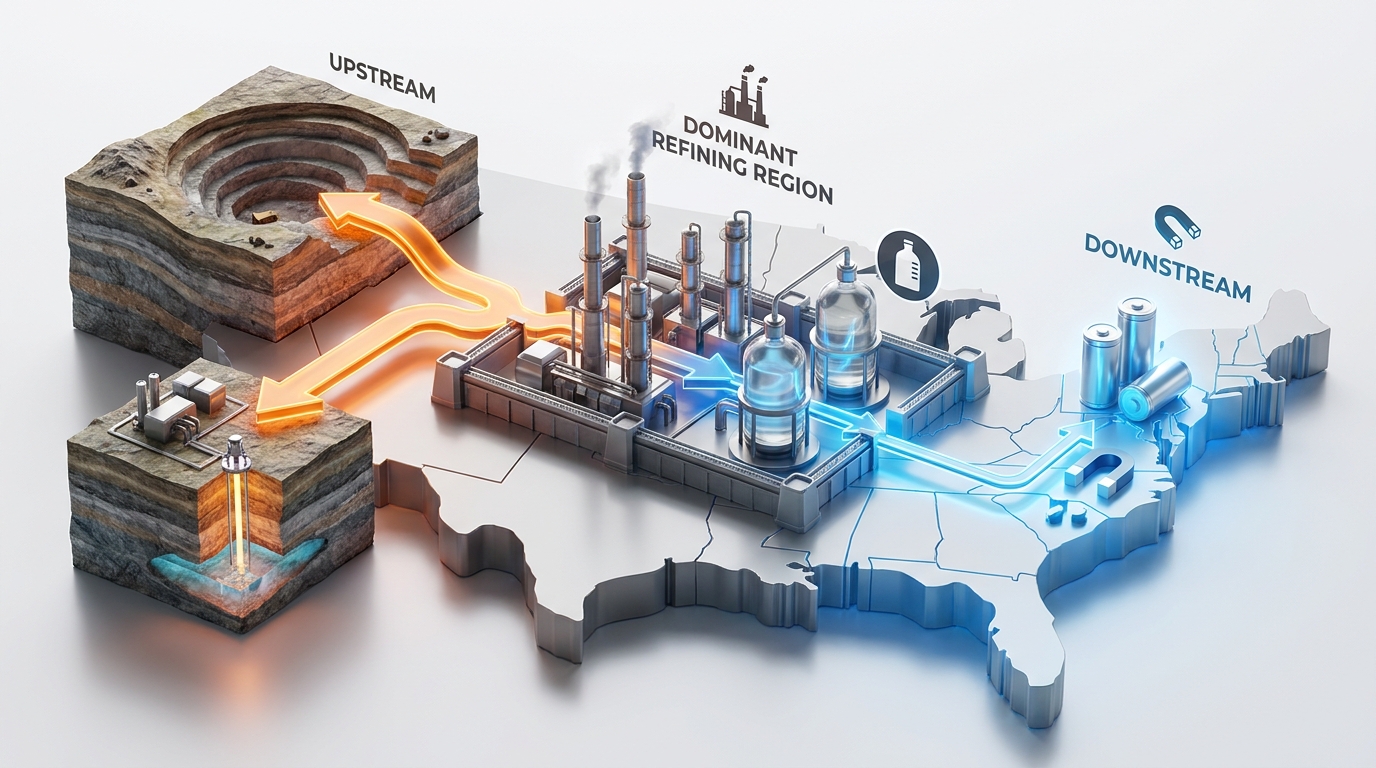
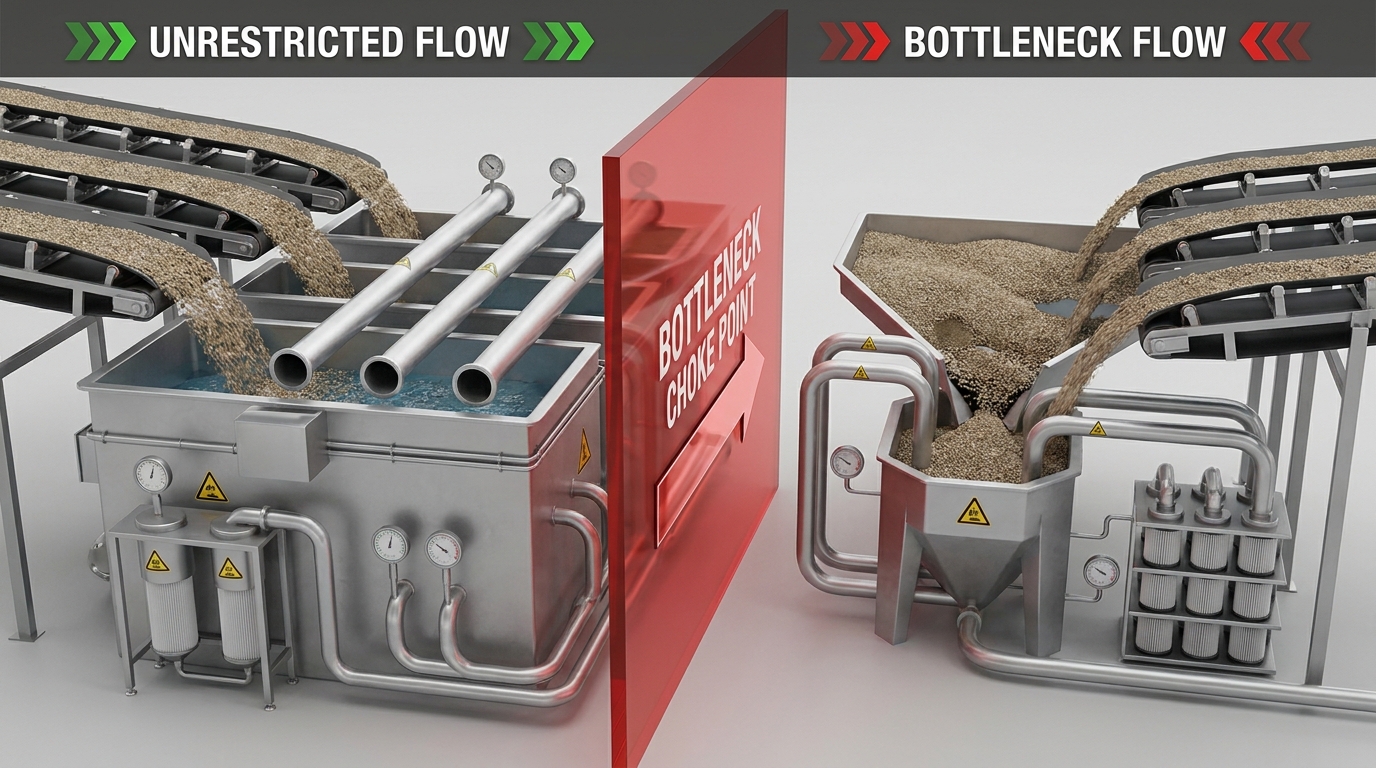
    Separation/oxide bottleneck illustration.
    Separation/oxide bottleneck illustration.

    Permitting, Compliance, and Jurisdictional Friction

    Permitting risk is rarely uniform across the chain. A mine, a separation plant, a metal facility, and a magnet plant each face different regulatory exposures. In the US, environmental review, state-level air and water permits, waste management, and site-specific litigation risk can move on different timelines. In Europe, environmental impact assessment, chemical handling, industrial emissions, water use, waste classification, and traceability obligations often shape the path from concept to commissioning. A single weak link in that stack can hold back the wider project narrative.

    Observed in practice, one of the more important discovery moments appears when a project has advanced engineering at the mine or magnet stage but has only preliminary work at the chemical processing stage. The downstream plant frequently carries the more sensitive waste, water, or emissions profile. Another recurring issue is geographic fragmentation: ore in one jurisdiction, separation in another, and downstream magnet manufacturing elsewhere. Every crossing introduces documentation needs tied to export controls, sanctions screening, rules of origin, transport classification, and product traceability.

    EU policy and US policy also frame risk differently. European critical raw materials policy places visible weight on strategic autonomy, sustainability, and resilience inside the bloc. US policy discussions more often emphasize security, industrial readiness, and domestic processing capacity. Both approaches matter in rare earth projects due diligence because a project may align politically with resilience goals while still carrying unresolved plant-level risk.

    Offtake, Financing, and Market-Support Signals

    Offtake and financing are often treated as proof of maturity, yet they function better as evidence categories than as conclusions. A long-term offtake announcement can indicate demand visibility, customer interest, or state-backed industrial alignment. It does not automatically prove that the product is qualified, that the volumes match realistic ramp-up, or that every intermediate stage exists. The same applies to financing language: committed funds, conditional support, public grants, export-credit backing, and strategic partnership memoranda carry very different implications for execution.

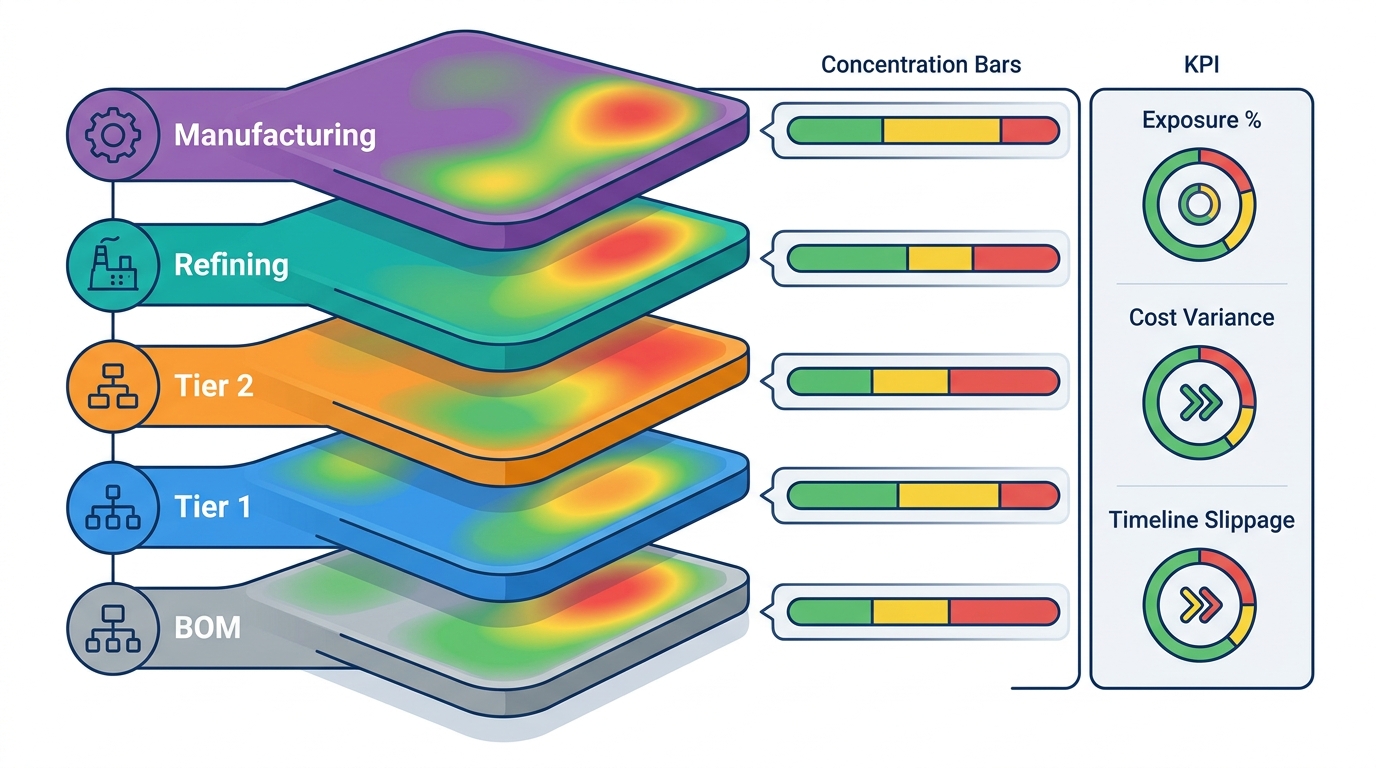
    Investor due-diligence planning visual.
    Investor due-diligence planning visual.

    Recent policy debate in the US and Europe has also brought more attention to coordinated market-support mechanisms. Reference-price systems, border-adjusted price floors, price-gap subsidies, and long-term offtake arrangements are discussed as ways to keep non-Chinese projects from being undercut by lower-priced Chinese supply. These mechanisms matter because rare earth projects can be technically sound yet commercially fragile during adverse pricing periods. At the same time, policy support does not commission a plant, resolve a metallurgical problem, or compress a permit timeline.

    Common Failure Modes Seen in Public Announcements

    • The mine is real, but the project ends at concentrate or mixed carbonate rather than separated oxides.
    • Separation is planned, but feed mineralogy, recoveries, or waste handling remain underdefined.
    • Separated oxides are expected, but metal-making and alloy conversion remain dependent on imported intermediates.
    • A magnet manufacturing line is announced, yet qualified alloy feed or customer acceptance is still absent.
    • Permitting progress is concentrated at the least complex stage, while the chemically intensive stage remains early.
    • Financing language is broad, but the funding stack is split across several facilities that need synchronized completion.
    • Recycling is included rhetorically, although feed availability, contamination handling, and product specification are not yet visible.

    What Tends to Matter More Than Headline Capacity

    For family offices, strategic metals research teams, and private wealth advisors conducting commercial investigation, the clearest signal is specificity. A credible announcement usually defines the stage, identifies the plant, locates the jurisdiction, names the intermediate product, and shows how the next conversion step is handled. It also tends to acknowledge the non-mining bottlenecks: rare earth separation, metal conversion, alloying, magnet manufacturing, environmental compliance, and customer qualification. When those pieces are visible, the supply chain story becomes measurable. When they are absent, diversification is often more narrative than operating reality.

    In that sense, the enduring question is not whether a rare earth project exists, but whether the chain from rock to magnet is actually continuous. Mining alone rarely answers that question. Separation, oxide purity, metal-making, alloy preparation, magnet manufacturing, permitting depth, logistics routes, and financing structure answer much more of it.

    Organizations looking for a deeper internal review structure can request Procyon’s strategic metals project due diligence questions as a working framework for screening US and Europe rare earth announcements without headline distortion.

  • Samarium-Cobalt Magnets to 550°C: The Defense-Grade Magnet Story Beyond NdFeB

    Samarium-Cobalt Magnets to 550°C: The Defense-Grade Magnet Story Beyond NdFeB

    **Samarium-cobalt magnets occupy a separate strategic category from NdFeB: lower peak magnetic strength, but materially better thermal stability, corrosion resistance, and magnetic predictability in defense, aerospace, and other high-temperature environments. The critical issue is not simple substitution; it is understanding where SmCo’s physics justify its cost, brittleness, and supply-chain dependence on both samarium separation and cobalt traceability.**

    Samarium-Cobalt Magnets and the High-Temperature Selection Problem

    Samarium cobalt magnets sit in a part of the permanent-magnet landscape that is often discussed far less than neodymium-iron-boron, yet in several defense-adjacent and aerospace systems they are the material that closes the engineering problem when NdFeB does not. That distinction matters for family offices, strategic metals analysts, private wealth advisors, and defense supply-chain observers because the decision is rarely about the strongest magnet in a catalog. It is about magnetic stability under heat, corrosion, thermal cycling, and long qualification windows.

    The essential point is straightforward. SmCo is not a general-purpose replacement for NdFeB, and it is not merely “NdFeB for hotter environments.” It is a different material bargain with a different manufacturing route, a different failure profile, and a different upstream risk map. In engineering terms, SmCo gives up part of the maximum energy product that makes NdFeB so valuable in compact motors and consumer electronics, but it gains operating-temperature headroom, corrosion resistance, and more predictable coercivity across hostile thermal envelopes. In strategic-metals terms, that means samarium cobalt magnets belong to a narrower market by tonnage, yet one with unusually high consequence per kilogram.

    That is where the recent focus has sharpened. The latest development in this segment is not a headline chemistry breakthrough. It is the tightening relationship between thermal qualification, cobalt traceability, non-Chinese rare-earth processing ambitions, and defense-program continuity. High-temperature magnet exposure is increasingly understood less as a simple materials story and more as a continuity-of-operations question across mining, separation, alloy production, sintering, machining, and end-use certification.

    What SmCo actually is, and why the crystal structure matters

    Commercial samarium cobalt magnets are usually discussed in two families: SmCo5, often called the 1:5 series, and Sm2Co17, commonly called the 2:17 series. The second family often includes additional alloying elements such as iron, copper, and zirconium to tune magnetic and thermal behavior. This is not chemistry trivia. The alloy family influences coercivity, remanence, maximum operating temperature, and the complexity of processing. In practice, 2:17 grades generally push the usable magnetic performance higher, while preserving the thermal stability that defines the SmCo category.

    Published design literature and manufacturer datasheets commonly place standard NdFeB continuous service near roughly 80°C, with higher-temperature grades extending toward about 150°C before demagnetization risk and remanence loss become more difficult to manage. SmCo grades are commonly used across approximately 150°C to 300°C, and specialty formulations are cited in the research brief as reaching continuous operation up to about 550°C. That difference explains why samarium cobalt magnets appear in radar assemblies, actuators, sensors, down-hole tools, and aerospace electronics where thermal transients are part of normal service rather than an exception.

    Another less appreciated differentiator sits at the cold end of the spectrum. SmCo retains magnetic functionality at cryogenic temperatures approaching absolute zero, which is why the material shows up in scientific instrumentation and other low-temperature assemblies where NdFeB becomes a less reliable choice. In other words, SmCo is unusual because it spans both heat and cold. That dual-envelope capability is precisely why the material keeps resurfacing in technical programs that cannot tolerate magnetic drift.

    The trade-off is real. NdFeB usually wins on raw magnetic strength per unit volume. The research brief cites SmCo at roughly 25-28 MGOe BHmax, materially below higher-end NdFeB grades. That is why SmCo does not displace NdFeB in every motor, drive, speaker, or traction platform. The system designer choosing SmCo is not buying maximum flux density. The system designer is buying stability when the thermal budget, corrosion burden, and demagnetization margin dominate the specification.

    That sentence is worth stating plainly because it captures the entire category: SmCo is not NdFeB with a heat shield attached. It is a different physical compromise, and the applications that justify it tend to be the ones where failure is operationally expensive, qualification is slow, and replacement is not casual.

    How samarium cobalt magnets are made, and why the process shapes the risk

    SmCo production is a powder-metallurgy story. The typical route begins with alloy melting, usually in vacuum or controlled atmosphere, followed by coarse crushing, fine milling, magnetic alignment, compacting, sintering, heat treatment, precision grinding, and final magnetization. The equipment list is familiar to magnet specialists: vacuum induction melting systems, inert-atmosphere milling lines, presses or isostatic compaction systems, sintering furnaces, aging furnaces, diamond grinding equipment, and high-field magnetizers. Each stage matters because magnetic performance is tied tightly to grain orientation, phase control, oxygen management, and dimensional tolerance.

    Several operational implications fall out of that route. First, SmCo is brittle. The material can chip or crack during machining and assembly, which raises scrap risk and handling requirements. Second, fine samarium- and cobalt-bearing powders demand oxygen control and disciplined dust management. Third, final dimensions are usually achieved by grinding rather than easy post-processing, which increases manufacturing sensitivity compared with softer engineered materials. Plant-level energy consumption in kWh per tonne was not specified in the provided materials, but the major drivers are clear enough: vacuum melting, controlled milling, high-temperature sintering, and precision grinding all impose meaningful utility and maintenance loads.

    Corrosion behavior changes the downstream burden as well. NdFeB often requires nickel, epoxy, or other protective coatings because iron-rich compositions are vulnerable to oxidation, particularly in humid or marine conditions. SmCo’s lower iron content gives it a built-in corrosion advantage, which simplifies some assemblies and improves durability in salt-laden or chemically aggressive environments. That does not mean the material is effortless. It means the engineering effort shifts from coating preservation toward fracture management, tolerance control, and thermal qualification.

    Conceptual comparison of SmCo vs NdFeB under thermal conditions (no text overlays).
    Conceptual comparison of SmCo vs NdFeB under thermal conditions (no text overlays).

    One of the more important execution insights emerges here. When a magnet program moves from catalog selection to production reality, the dominant issue is often no longer only the alloy. It becomes the interaction between alloy quality, machining yield, adhesive performance, magnetic circuit design, and thermal derating. That is why samarium cobalt magnets look deceptively simple on a comparison chart and substantially more complex once production engineers, qualification teams, and compliance officers enter the room.

    SmCo versus NdFeB without the usual oversimplification

    Comparing SmCo and NdFeB in plain English is useful, but oversimplification distorts the actual engineering decision. NdFeB usually offers stronger magnetic performance for a given size, which is decisive in compact motors, many consumer electronics, and applications where volume efficiency is the first-order variable. SmCo, by contrast, is often chosen where the field must remain stable despite elevated temperature, corrosive exposure, or severe thermal cycling. The correct comparison is therefore not “better” versus “worse.” It is “which constraint dominates the system.”

    • Raw magnetic strength: NdFeB generally leads on BHmax and compactness.
    • Operating temperature: SmCo generally leads, particularly once continuous service moves well beyond standard NdFeB limits.
    • Corrosion resistance: SmCo generally leads because of lower iron content and reduced coating dependence.
    • Cryogenic behavior: SmCo is the more reliable choice in very low-temperature environments.
    • Mechanical robustness: neither material is forgiving, but SmCo’s brittleness is a recurring manufacturing and assembly issue.
    • Cost and upstream risk: NdFeB is tied closely to neodymium and often dysprosium or terbium in high-temperature grades; SmCo is tied to samarium and cobalt, with cobalt often acting as the sharper supply-chain pressure point.

    Heavy rare earths complicate the comparison further. High-temperature NdFeB grades often rely on dysprosium or terbium additions to hold coercivity at elevated temperature. That can extend service temperature, but it also raises cost, changes magnetic performance, and introduces a different rare-earth dependency profile. SmCo therefore does not sit opposite standard NdFeB alone; it also sits opposite a subset of enhanced NdFeB grades that solve part of the temperature problem while importing heavy-rare-earth exposure. This is precisely why the phrase “substitute” often obscures more than it clarifies.

    There is another practical difference that engineers rarely ignore: magnetic predictability over time. In defense and aerospace assemblies, a slight drift in magnetic behavior can cascade into sensor noise, actuator deviation, or radar-component instability. In these systems, the magnet is often small in mass and enormous in consequence. That is why SmCo remains relevant even though the broader magnet market is dominated by NdFeB volumes.

    Where samarium cobalt magnets actually earn their place

    The research brief correctly anchors the most important use cases. Aircraft and spacecraft actuators, high-reliability sensors, missile components, radar hardware, and traveling-wave tube magnet assemblies all value stable magnetic properties across steep thermal excursions. In these systems, electromagnetic stability is not cosmetic. It influences guidance fidelity, signal integrity, control response, and service-life confidence. That is why SmCo shows up repeatedly in defense rare earth magnets discussions even though it receives far less public attention than NdFeB.

    Industrial service offers a parallel case. Down-hole oil and gas tools operate in hot, corrosive, high-pressure environments where standard NdFeB can become a liability. Marine motors and generators face humidity, salt, and long maintenance intervals. Certain traction and turbo-machinery components encounter sustained thermal loading that turns high-temperature magnet selection into a reliability issue rather than a procurement detail. SmCo’s combination of heat tolerance and corrosion resistance often becomes the deciding factor in these regimes.

    Scientific and cryogenic applications are even clearer. Benchtop NMR systems, particle-accelerator subsystems, and cryogenic sensors require magnets that do not become erratic when the operating environment is deeply cold. SmCo is one of the few permanent-magnet classes that can bridge that demand while still supporting practical field strengths. This often surprises generalist observers because the public conversation around rare-earth magnets is usually dominated by electric vehicles and wind turbines. SmCo’s core territories are different: smaller volume, tighter qualification, harsher service, and less tolerance for field instability.

    That leads to a sharp but accurate observation. Samarium cobalt magnets are not everywhere because they do not need to be. They appear where system designers run out of tolerance for heat, corrosion, and magnetic drift.

    At-a-glance thermal stability and corrosion durability comparison (diagram only).
    At-a-glance thermal stability and corrosion durability comparison (diagram only).

    Where SmCo does not replace NdFeB

    The temptation to frame SmCo as the next broad magnet alternative misses the economics and the engineering. NdFeB remains the dominant choice in many electric motors, electronics, audio components, and energy applications because it delivers more magnetic strength per unit volume and because many of those systems can be designed around its thermal limits. If the equipment can be cooled, coated, shielded, or derated economically, the case for SmCo often weakens quickly. The same is true when the application is highly cost-sensitive and magnetic strength drives miniaturization.

    SmCo also brings manufacturing penalties. The material is expensive to process, brittle in handling, and less forgiving during machining and assembly. Change one thing in the discussion-raise the temperature, add corrosion, extend service life, increase qualification cost, tighten magnetic stability requirements-and SmCo begins to make more sense. Remove those constraints, and NdFeB usually retakes the field. This is why the most serious expert perspective in this category is also the least dramatic: material selection in permanent magnets is mostly an exercise in constraint ranking.

    Supply-chain architecture: samarium and cobalt do not carry the same risk

    SmCo magnets depend on two strategic inputs that behave very differently upstream. Samarium is a light rare earth, usually recovered as a co-product within broader rare-earth mining and separation systems rather than pursued as an isolated mining target. The research brief cites global samarium production in the range of roughly 2,000 to 3,000 metric tonnes annually, far below neodymium output, and notes the heavy concentration of rare-earth processing in China. That matters because samarium availability is not only a geological issue. It is a separation-and-refining issue, and separation capacity is geographically concentrated.

    Cobalt is the sharper independent constraint. The research brief notes that the Democratic Republic of Congo accounts for roughly 70% of global cobalt supply, with additional output from jurisdictions such as Zambia, Russia, Australia, and Canada, while significant refining capacity remains concentrated in China. Unlike samarium, cobalt is not primarily pulled by permanent magnets. It has its own large competing demand centers, especially batteries. That means the cost, traceability, and availability of cobalt are shaped by a much broader industrial contest than the SmCo magnet sector alone.

    The result is a two-layer supply-chain problem. Samarium exposure is tied closely to rare-earth separation concentration and export-policy sensitivity. Cobalt exposure is tied to mine geography, refining bottlenecks, battery-market competition, and responsible-sourcing scrutiny. A program can therefore face adequate samarium chemistry but strained cobalt procurement, or secure cobalt units but limited access to qualified samarium-bearing magnet feedstock. The bottleneck is rarely one mine or one refinery in isolation. The bottleneck is the intersection of samarium separation, cobalt traceability, and long qualification cycles.

    That intersection is where industrial resilience becomes the relevant frame for capital allocators and strategic-metals observers. SmCo exposure is easy to misunderstand if viewed only through commodity tonnage. The more informative lens is qualification lock-in. Once a defense or aerospace assembly is validated around a specific magnet chemistry, dimensional tolerance, coercivity class, and thermal behavior, substitution is slow and documentation-heavy. A temporary upstream dislocation can therefore have consequences out of proportion to the physical mass of material involved.

    Implementation, maintenance, and compliance constraints

    Operational reality begins with qualification. Aerospace and defense platforms do not absorb magnet substitutions casually because the magnet is part of a broader magnetic circuit, thermal model, and lifetime-performance envelope. Coercivity at temperature, irreversible flux loss, vibration response, corrosion behavior, outgassing characteristics for space use, adhesive compatibility, and machining-induced edge damage can all become qualification items. The technical data package is therefore as important as the alloy label on a procurement sheet.

    Maintenance considerations are similarly specific. SmCo’s corrosion resistance can reduce coating-management burdens, but brittle fracture risk remains a practical issue during assembly, rework, and service. Fixtures, handling protocols, and magnet placement must account for chipping and crack initiation. In motors and actuators, thermal cycling can also interact with adhesives, sleeves, or retaining structures even when the magnet itself remains magnetically stable. A high-temperature magnet that survives thermally but fails mechanically is still a failed design.

    Compliance adds another layer. Cobalt sourcing draws responsible-minerals scrutiny, while rare-earth separation can draw trade-policy and export-control attention. Defense and aerospace buyers also tend to require stronger lot traceability, tighter materials documentation, and more rigorous change control than commercial programs. None of this is abstract. A magnet supplier may have acceptable chemistry but inadequate documentation discipline for regulated end markets. That gap can be just as disruptive as a raw-material shortage.

    Abstracted, brand-free supply-chain context linking samarium and cobalt flows to magnet production.
    Abstracted, brand-free supply-chain context linking samarium and cobalt flows to magnet production.

    One practical conclusion follows. In SmCo programs, manufacturing competence and documentation discipline are part of the material specification, not an administrative afterthought.

    What high-temperature magnet exposure means for family offices and strategic-metals observers

    For family offices and strategic-metals observers, the relevant takeaway is not a broad-brush narrative about demand growth alone. High-temperature magnet exposure is a specific form of industrial exposure. It sits where small material volumes can support high-value systems, where program qualification slows substitution, and where two upstream inputs-samarium and cobalt—belong to different geopolitical and processing risk structures. That makes the category analytically rich even when its tonnage is modest relative to NdFeB-heavy markets.

    The most useful lens is often value-chain segmentation. Upstream risk lives in rare-earth mining, separation chemistry, cobalt mine output, and refining concentration. Midstream risk lives in alloying, powder control, sintering, precision machining, and scrap recovery. Downstream risk lives in certification, thermal performance, long-life reliability, and the inability to requalify a mission-critical assembly quickly. When these layers are mapped together, SmCo stops looking like a niche curiosity and starts looking like a specialized materials system with unusually high continuity sensitivity.

    That is also why simplified comparisons to NdFeB can mislead capital allocators. NdFeB and SmCo do compete in some design spaces, but SmCo’s most defensible positions are often the ones that cannot be arbitraged away by a cheaper magnet unless the entire system architecture changes. In plain terms, some end markets buy SmCo not because it is elegant, but because the alternative introduces an unacceptable thermal or reliability penalty.

    Observed scenarios, trade-offs, and limiting conditions

    • SmCo tends to be selected when continuous temperature is elevated, thermal cycling is severe, corrosion burden is persistent, cryogenic operation is relevant, or magnetic drift has outsized system consequences.
    • NdFeB tends to remain dominant when compactness, peak magnetic strength, and lower system cost matter more than extreme thermal stability.
    • High-temperature NdFeB grades can narrow the gap, but often at the price of heavier rare-earth dependence and more complicated cost-performance trade-offs.
    • Manufacturing limits for SmCo often appear in brittleness, machining yield, assembly damage, and supplier qualification depth rather than in chemistry alone.
    • Supply-chain limits often arise from the combined effect of rare-earth separation concentration, cobalt sourcing scrutiny, and long validation cycles in aerospace and defense programs.

    Those conditions define the success and failure boundary more accurately than headline demand narratives do. The strongest applications for samarium cobalt magnets are the ones where the thermal and environmental envelope is not negotiable. The weakest are the ones where a clever engineer can redesign cooling, add coatings, accept larger dimensions, or switch to enhanced NdFeB without destabilizing the program. That is the real shape of the decision.

    Note on Procyon methodology Procyon crosses trade-text monitoring, including MOFCOM and related export-control or industrial-policy notices where relevant, with supply concentration data cited in the brief and the operating specifications of end-use systems. The analysis then tests material stories against actual engineering constraints such as temperature envelope, coercivity retention, corrosion burden, qualification difficulty, and service-life requirements.

    Conclusion

    Samarium cobalt magnets remain strategically important because they solve a narrow but critical class of magnetic problems that NdFeB does not solve cleanly. Their relevance comes from thermal stability, corrosion resistance, and magnetic predictability under harsh service conditions, balanced against weaker raw magnetic strength, brittle mechanics, and a supply chain that depends on both samarium separation and cobalt traceability. In practical terms, SmCo belongs less to the world of commodity magnet substitution than to the world of qualification-sensitive systems where a small component can carry a disproportionate operational burden. Procyon Metals maintains active monitoring of the weak signals in magnet metals, export policy, qualification behavior, and end-use specifications that will define the next phase.

    For discussion of magnet metals exposure across samarium, cobalt, NdFeB, and specialized high-temperature magnet markets, Procyon Metals remains available for confidential briefing.

  • Project Vault and the Critical Minerals Paradox: What IT Leaders Need to Do Now

    Project Vault and the Critical Minerals Paradox: What IT Leaders Need to Do Now

    **Project Vault highlights an uncomfortable truth for US business leaders: reducing dependence on Chinese critical minerals may require buying from China first. For CIOs, infrastructure leaders, and procurement teams, the real value is not instant independence but better resilience-more predictable hardware costs, shorter deployment delays, and stronger readiness for regulated and public-sector opportunities.**

    Project Vault and the Critical Minerals Paradox: What It Means for IT Leaders

    Recent policy discussions around Project Vault point to a hard reality that many executives already sense: the US cannot unwind its critical mineral exposure on a political timetable. China still dominates large parts of the mining, refining, and processing chain behind rare earths, graphite, lithium, cobalt, and other inputs that sit inside semiconductors, batteries, cooling systems, and advanced electronics. That creates a paradox. To build a US critical minerals stockpile quickly enough to matter, early purchases may still need to come from Chinese supply chains.

    This means for your business that the near-term goal is not mineral sovereignty. It is continuity. If your company depends on AI infrastructure, data center expansion, battery backup systems, networking gear, or specialized manufacturing equipment, Project Vault matters because it reframes minerals as an operating risk, not just a geopolitical headline.

    The Business Challenge: Critical Minerals Are Now an IT Supply Chain Issue

    For years, many technology leaders treated mineral exposure as someone else’s problem-something for automakers, miners, or defense planners to worry about. That is no longer practical. The components your business relies on every day are built on upstream materials that have become harder to source, harder to price, and harder to replace on short notice.

    The real cost isn’t the technology – it’s the delay. A GPU cluster that ships six months late can derail an AI roadmap. A battery backup project that misses a commissioning window can postpone a data center expansion. A sudden price jump in constrained materials can turn a carefully approved capital plan into an emergency budget discussion.

    Where the exposure shows up

    • Rare earth elements used in magnets for motors, cooling systems, robotics, and manufacturing tools
    • Lithium, cobalt, graphite, and nickel used in batteries, backup power, mobile devices, and energy storage
    • Specialty mineral inputs embedded across semiconductor equipment and advanced electronics production
    • Indirect dependencies that affect server lead times, networking hardware availability, and infrastructure rollout schedules

    Companies like yours typically feel this exposure in three places first: higher procurement volatility, slower deployment cycles, and more pressure from customers or regulators to prove sourcing resilience.

    Why Traditional Responses Fall Short

    Most organizations have already tried some version of the usual playbook: add a second supplier, shift some sourcing outside China, or wait for domestic production to catch up. The problem is that these moves help on paper faster than they help in practice.

    • Tariffs can change pricing, but they do not create processing capacity.
    • Domestic mining projects take years, often longer, to permit and scale.
    • Allied sourcing helps, but available volume is still limited in key categories.
    • Spot-market buying tends to increase risk precisely when supply gets tight.

    That is the central tension in any critical minerals stockpile strategy. The US wants to reduce US-China mineral dependency, but it cannot do that immediately because China remains deeply embedded in the current supply chain. In business terms, this is less like switching office suppliers and more like refinancing a company while the old lender still controls the market.

    Geopolitical supply-chain dependency visualizing the paradox
    Geopolitical supply-chain dependency visualizing the paradox

    Here’s what actually moves the needle: creating buffer capacity, locking in committed supply, and giving non-Chinese processors enough long-term demand to invest. That is the strategic logic behind Project Vault.

    The Modern Solution: What Project Vault Actually Changes

    As described publicly, Project Vault is a multibillion-dollar public-private effort to build a strategic stockpile of critical minerals and signal guaranteed demand to future suppliers. For business leaders, that matters because stockpiles do two things at once. First, they buy time during a supply shock. Second, they make diversification more financially realistic by giving miners, refiners, and processors confidence that demand will still be there when new capacity comes online.

    In plain English, Project Vault is not a shortcut to independence. It is a bridge. And yes, part of that bridge may initially be built with materials sourced from China. That sounds contradictory, but from an operational perspective it is often the only practical path between today’s market structure and a more resilient future state.

    Like maintaining cash reserves during a credit squeeze, a critical minerals stockpile gives buyers options. It can reduce panic buying, smooth procurement cycles, and create more negotiating leverage when export controls or trade tensions tighten the market.

    [BUSINESS_IMPACT]
    Typical Results: Lower exposure to 50%+ price shocks | Lead times reduced from 6-12 months to 3-6 months | Stronger positioning for regulated and defense-adjacent contracts
    Implementation Time: 3-6 months for exposure mapping and pilot sourcing; 12-24 months for broader supplier diversification
    ROI Timeline: 18-36 months in normal conditions; faster if export restrictions tighten
    [/BUSINESS_IMPACT]

    What this changes in practical business terms

    • Cost predictability: less exposure to sudden pricing spikes when supply tightens
    • Faster deployment: better odds of getting constrained hardware on time
    • Risk reduction: fewer emergency purchases, fewer project delays, fewer missed launch windows
    • Strategic positioning: stronger alignment with sourcing expectations emerging in public-sector and defense-adjacent markets
    Impact Area Traditional China-Dependent Model Stockpile-Aligned / Diversified Model
    Lead times for constrained components Often 6-12 months Often 3-6 months with reserved supply
    Hardware cost volatility High exposure to sudden swings More stable through committed contracts and buffers
    Deployment planning Frequent schedule risk Better confidence in rollout timing
    Compliance and contract readiness Reactive sourcing posture Stronger fit for regulated and public-sector bids

    Real Impact: The Numbers Start to Matter Quickly

    In a modeled mid-market scenario, a data center operator spending around $10 million annually on hardware could see total procurement and disruption-related costs fall from roughly $12.5 million to about $10.1 million once buffered sourcing, better supplier commitments, and compliance planning are in place. The savings are not just in lower purchase prices. They come from fewer delays, less downtime exposure, reduced emergency buying, and better contract execution.

    That is the part many leaders miss. Short-term acquisition costs may rise by 10% to 15% when you pay for guaranteed access, qualifying new suppliers, or carrying strategic inventory. But the long-term total cost of ownership often improves because the business stops absorbing hidden costs in the form of missed deadlines, expedited logistics, and interrupted infrastructure programs.

    In our experience with similar companies, the hardest part is not paying the initial premium. It is acting early enough. Once a shortage is visible to everyone, the market has already repriced the risk.

    [KEY_CONSIDERATIONS]
    ✓ Better predictability for semiconductors, servers, batteries, and backup power planning
    ✓ Reduced exposure to export controls, supply delays, and emergency broker pricing
    ⚠ Short-term resilience may still rely on Chinese processing, so continuity improves before independence does
    [/KEY_CONSIDERATIONS]

    The Honest Trade-Off: Resilience Improves Before Sovereignty Does

    Project Vault exposes the hard limits of American mineral sovereignty. Even with political urgency, financing support, and private-sector participation, domestic and allied processing will not scale overnight. That means early stockpile builds may still depend on Chinese inputs, even while the broader strategy is designed to reduce future dependence on China.

    For some executives, that sounds like failure. It is better understood as sequencing. Step one is building a buffer against disruption. Step two is using that buffer to create room for alternative supply chains to mature. If you skip step one, step two becomes harder because the market remains trapped by short-term scarcity and subsidized incumbents.

    IT operational readiness and procurement tracking concept
    IT operational readiness and procurement tracking concept

    What we see in the market is a broader stockpiling race. Governments and large manufacturers are no longer assuming critical materials will be available exactly when needed. They are reserving supply in advance. For technology leaders, that changes procurement from a transactional exercise into a resilience strategy.

    Your Path Forward

    If this issue touches your infrastructure roadmap, the next move does not need to be dramatic. It needs to be disciplined. The organizations that benefit most are usually the ones that treat mineral exposure the same way they treat power availability, cyber risk, or cloud concentration: as a board-level dependency that deserves active management.

    • Map exposure in 30-60 days: identify where critical minerals affect servers, batteries, networking, cooling, and vendor lead times
    • Prioritize high-impact categories in 60-90 days: separate business-critical components from easily replaceable items
    • Pilot resilience measures in 90-180 days: test dual sourcing, reserved inventory, and longer-term supply commitments
    • Integrate sourcing risk into planning within 6-12 months: connect procurement, ERP, infrastructure planning, and finance
    • Scale diversification over 12-24 months: align future buying with domestic and allied supply where volume and economics make sense

    What we’ve learned from enterprise infrastructure planning is simple: the companies that move first rarely do so because they know exactly how policy will unfold. They move because they know delay is expensive. If your business is building AI capacity, modernizing data centers, or competing for regulated contracts, resilience in mineral sourcing is becoming part of the operating model.

    The Bottom Line

    Project Vault is important precisely because it is imperfect. It does not solve US-China mineral dependency overnight. It reveals it. And that clarity is useful. Business leaders do not need a perfect geopolitical outcome to make smarter decisions today. They need a realistic plan to protect budgets, keep deployments on track, and reduce exposure to the next supply shock.

    The companies that win here will not be the ones waiting for full mineral independence. They will be the ones using this transition period to build optionality, improve procurement discipline, and turn supply resilience into a competitive advantage.

  • Securing Defense Supply Chains: Burn-Rate to Resilience

    Securing Defense Supply Chains: Burn-Rate to Resilience

    Securing Defense Supply Chains: From Burn Rates to Business Resilience

    In today’s high-tempo operations, rapid expenditure of advanced munitions can expose hidden vulnerabilities in defense supply chains—delaying replenishment, driving up costs, and threatening mission readiness. For business leaders, the question isn’t only “how many rounds remain.” It’s: which critical materials and suppliers determine whether we can restock under pressure without blowing timelines, budgets, or compliance obligations?

    Executive Summary

    Key Takeaways:

    • Hidden Risk: Rapid munition burn rates shift the bottleneck upstream—from finished inventories to specialty metals and qualified components [1][2]. In business terms: the fastest “consumption rate” can uncover the slowest “replenishment capability,” often outside your direct control.
    • Immediate Action: In 5 days, deploy our Risk Exposure Map template to identify Tier 1–3 dependencies for rare earth magnets, gallium, germanium, tungsten, antimony, and titanium.
    • Next Steps: In 30 days, finalize supplier qualification scorecards and origin-documentation audit reports to close the largest compliance gaps.
    • Long-Term: Integrate physical storage decisions into annual planning to reduce lead-time risk and improve readiness metrics by up to 25%.

    The Business Impact of Critical Metal Shortages

    When high-value systems like Tomahawk cruise missiles or THAAD interceptors are consumed rapidly, restocking isn’t simply a manufacturing question—it’s a risk to operational continuity and contract performance. A single week’s delay in sourcing gallium-based semiconductors can cost up to $2 million in line-downtime and penalties. By proactively mapping exposure to specialty materials, firms can:

    • Reduce unplanned downtime by 15–25%.
    • Cut expedited freight and premium sourcing premiums by 10–20%.
    • Shorten qualification cycles from 90 to 45 days.

    Relatable example: Many organizations plan around demand forecasts, but when a qualified supplier misses a documentation window—or lead times stretch because a metal input is constrained—production schedules effectively become a “negotiation with time.” A risk map turns that uncertainty into a prioritization plan your procurement, finance, and compliance teams can act on together.

    Illustrated supply-chain flow for critical metals into munitions production
    Illustrated supply-chain flow for critical metals into munitions production

    Case Study: Mapping a Munition’s Bill of Materials

    Example: An anti-ship missile includes:

    • NdFeB rare earth magnets (powertrain assembly)
    • Tungsten penetrator core (warhead module)
    • Germanium infrared sensors (guidance electronics)

    Workflow to map Exposure:

    1. Extract BOM from procurement ERP into our Risk Exposure Map template (deliverable #1).
    2. Classify each material to Supplier Tiers 1–3 with fields: supplier name, location, qualification status, lead time, documentation completeness.
    3. Score each entry using our Supplier Qualification Scorecard (deliverable #2) to prioritize remediation.
    4. Output: A decision-ready dashboard indicating “High-Risk” nodes requiring storage, dual sourcing, or expedited qualification.

    Business translation: This approach helps you stop guessing where risk lives. Instead of reacting to delays, you can quantify which dependencies create the biggest schedule and cost exposure—and then fund the right mitigation (inventory, alternate suppliers, or accelerated qualification).

    Burn-rate vs. replenishment capacity over time
    Burn-rate vs. replenishment capacity over time

    Five-Day Blueprint: Rapid Risk Exposure Mapping

    Deliverables:

    • Risk Exposure Map template (Excel/Power BI): pre-built columns for metal type, supplier tier, lead time, documentation status.
    • Quick-start user guide: step-by-step instructions and example entries for a military avionics program.
    • Initial dashboard: graphic heat map highlighting top-5 materials by risk level.

    Why this matters to leaders: In five days, you get a visible, shareable view of risk concentration—so cross-functional stakeholders (programs, procurement, finance, compliance) align on priorities before the next procurement cycle locks in.

    Thirty-Day Deep Dive: Supplier Qualification & Compliance Audit

    Deliverables:

    • Supplier Qualification Scorecard: automated scoring of purity, origin documentation, export-control risk, and audit history.
    • Gap Analysis Report: identifies missing certificates, expirations, and single-source vulnerabilities with cost-impact estimates.
    • Mitigation Plan Outline: recommended dual-sourcing options, expedited qualifier workshops, and storage location assessments to safeguard 90 days of demand.

    Business translation: You’re not just “auditing paperwork.” You’re reducing the likelihood that compliance issues or qualification bottlenecks become the trigger for costly schedule slippage.

    Critical metal inputs for defense industry processing
    Critical metal inputs for defense industry processing

    Building Long-Term Resilience

    Integrate material risk reviews into annual budgeting and strategic planning to:

    • Secure options contracts for critical metals at fixed price tiers.
    • Establish forward-deployed inventory pools near key production sites, reducing lead-time variability by up to 40%.
    • Embed custody and traceability metrics into board-level KPIs to ensure sustained focus on supply-chain health.

    Outcome: Resilience becomes measurable—through readiness metrics, lower volatility in procurement, and fewer surprises that disrupt delivery commitments.

    Calls to Action

    • Schedule a Supply-Chain Risk Workshop: Engage Codolie experts to tailor the 5/30-day templates to your program.
    • Download the Risk Exposure Map starter kit: Instant access to our Excel template and user guide.
    • Contact us for a pilot audit: Validate your top 10 suppliers’ qualification documentation and receive a free gap analysis summary.

    Sources

    1. Le Parisien, “U.S. Tomahawk, JASSM and THAAD Use in Iran War Raises Readiness Questions,” April 24, 2026.
    2. Codolie Proprietary Intelligence, “Defense Critical Metals Supply-Chain Assessment,” May 2026.
    3. Public Domain Data on Critical Minerals and Defense Procurement (no audited stockpile counts publicly available).
  • Securing Your Supply: Business Resilience for Critical Metals

    Securing Your Supply: Business Resilience for Critical Metals


    Securing Your Supply of Critical Metals: A Business Imperative


    Securing Your Supply of Critical Metals: A Business Imperative

    Modern enterprises—from automotive OEMs to data-center operators—depend on a handful of high-value metals and minerals that are increasingly hard to source. When lithium for batteries, copper for power lines, or rare earths for electric-motor magnets become scarce or threaten your cost structure, the impact on revenues and project timelines can be dramatic. In boardrooms worldwide, critical metals have moved from a technical sidebar to a strategic agenda item.

    Why This Matters Now:

    • Electrification, AI infrastructure, and renewable energy rollouts are climbing corporate priority lists.
    • Geopolitical shifts and trade curbs can interrupt refining or processing overnight.
    • Substitute materials often add cost or compromise performance—undermining margins or product quality.

    If you lead procurement, supply chain, or strategy, your next quarterly plan should include a clear stance on critical‐metal resilience.

    Visual primer of key critical minerals and their distinct appearances (no labels).
    Visual primer of key critical minerals and their distinct appearances (no labels).

    1. Defining Success: Business Outcomes Over Commodity Exposure

    “Owning exposure” to a trending metal is not a strategy—it’s a gamble. True success means:

    • Visibility: You can answer within days which metals underlie each product line, service, or project.
    • Continuity: You have multiple sourcing routes or contracts covering >80% of your annual volume.
    • Cost Predictability: Price variance versus budget falls within an acceptable corridor (e.g., ±5%).
    • Strategic Flexibility: You can pivot suppliers or process routes if a single country or plant stops shipping.

    Business leaders at a European EV manufacturer recently mapped their lithium and nickel dependencies within 60 days, negotiated 5-year offtake agreements covering 70% of demand, and reduced single‐country risk from 90% to 30%. Their margin volatility dropped by 12% in the following year.

    2. The Core Metals Map: Aligning Inputs to Business Value

    Not all critical metals behave the same. Align each material to your use case:

    • Lithium & Nickel:
      Use Case: EV batteries, grid storage.
      Business Risk: Price spikes erode product margins; long lead times on new supplier qualifications.
      Typical Mitigation: 3-5 year supply agreements; co-investment in recycling pilots.
    • Copper:
      Use Case: Renewable infrastructure, data centers, charging networks.
      Business Risk: Demand outpaces existing mine and smelter capacity; transport bottlenecks.
      Typical Mitigation: Strategic buffer inventories; regional sourcing partnerships.
    • Rare Earth Elements (REEs):
      Use Case: EV motors, wind-turbine generators, defense electronics.
      Business Risk: Processing dominated by a single country; high geopolitical sensitivity.
      Typical Mitigation: Dual‐sourcing from emerging refiners; investment in alternative magnet designs.
    • Gallium & Germanium:
      Use Case: Semiconductors, telecom equipment.
      Business Risk: Strict export controls; short supply chains.
      Typical Mitigation: Long‐term contracts with guaranteed release clauses; inventory pooling with peers.

    3. Staged Investment: Visibility, Resilience, Optionality

    Building resilience happens in phases:

    • Phase 1 (0–3 months): Visibility
      Map exposures by material, supplier tier, and geography. Produce an executive‐level dashboard of “% revenue at risk” per metal.
    • Phase 2 (3–12 months): Commercial Resilience
      Qualify alternate suppliers, secure multi‐year offtakes, adjust inventory policies, and embed price collars or index-linked pricing.
    • Phase 3 (1–3 years): Strategic Optionality
      Co-invest in secondary supply (recycling/refining), establish regional processing alliances, or negotiate equity stakes in promising projects.

    Case in Point: A multinational utility staged its critical metals budget: 10% on analytics and reporting (Year 1), 50% on contract renegotiation (Years 1–2), and 40% on offtakes and finance structures (Years 2–4). By Year 3, their “price‐shock readiness” improved by 60% against a modelled 15% supply disruption.

    Supply chain structure and bottlenecks visualization.
    Supply chain structure and bottlenecks visualization.

    4. Practical Roadmap & Checklist

    Apply this four‐step checklist to make rapid progress:

    1. Map Entry Points: Identify where each critical metal sits—directly in products or indirectly through suppliers.
    2. Prioritize by Impact: Score metals on substitute difficulty, supply concentration, and revenue at risk.
    3. Redesign Supply Posture: Shift from spot purchases to structured contracts, dual sourcing, and inventory buffers.
    4. Institutionalize Governance: Embed critical‐metal KPIs in executive dashboards—concentration ratios, contract coverage, and time-to-recovery metrics.

    5. Measuring Progress: Key Business Metrics

    Track these KPIs to prove ROI:

    • Single‐Country Dependency (%): Aim for <50% per critical metal.
    • Contract Coverage (%): Target ≥80% of annual volume under fixed or priced agreements.
    • Inventory Days On Hand: Maintain buffer for 4–8 weeks of supply where logistics are fragile.
    • Price Variance vs. Budget: Keep within a ±5% band for each material.
    • Supply Shock Scenario Readiness: Quantify EBITDA impact of a 10–20% shortfall and track improvement over time.

    6. Avoiding Common Pitfalls

    • One-Size-Fits-All Theme: Treat each metal and value chain uniquely.
    • Reserve Announcements vs. Usable Supply: Focus on refining and qualification, not just mine output.
    • Overreliance on Recycling: Important long-term, but limited near-term buffer.
    • Ignoring ESG Risks: Traceability lapses can shut down a supply line despite availability.
    • Delayed Decisions: Slow strategies leave you exposed for years while competitors get ahead.

    7. Call to Action: Executive Next Steps

    Business leaders should treat critical-metal resilience as a standing strategic agenda. Start today by:

    Framework for evaluating geopolitical, operational, and market risks.
    Framework for evaluating geopolitical, operational, and market risks.
    • Commissioning a 30-day exposure audit and executive briefing.
    • Setting a board-level target for contract coverage and country diversification.
    • Engaging with supply-chain specialists to design your bespoke multi-phase investment plan.

    Ready to transform risk into resilience? Contact Codolie’s Critical Metals Practice to schedule a strategy workshop or download our Critical Metals Resilience Toolkit.

  • Securing Rare Earth Supply: Strategic Playbook for Business Leaders

    Securing Rare Earth Supply: Strategic Playbook for Business Leaders


    Securing Rare Earth Supply: Strategic Playbook for Business Leaders

    Why this matters: As electric vehicles, wind turbines, robotics, and defense systems proliferate, securing neodymium, praseodymium, dysprosium, and terbium becomes a board‐level mandate. Price spikes from $80 to $200/kg in under six months (Fastmarkets, 2026) and shifting export quotas (China Mof, 2025) show that supply shocks can erode margins, delay product launches, and trigger stakeholder backlash.

    Executive Summary

    Business leaders face two intertwined risks in rare earths: cost volatility and supply concentration. This guide translates technical points into tangible actions—mapping exposure, structuring contracts, diversifying sources, and building midstream partnerships—to protect EBITDA, preserve launch schedules, and maintain competitive advantage.

    1. Business Objectives: Defining Success

    Your north star is secure access at acceptable cost and acceptable risk. Success for industrial buyers and investors looks like:

    • Production continuity: Zero unplanned shutdowns due to magnet shortages.
    • Margin stability: Reducing input‐cost variance by 50% versus benchmark indices.
    • Negotiation leverage: 10–15% better pricing through multi‐year indexed contracts.

    Example: A European wind‐turbine OEM secured a five‐year NdPr contract with a floor/ceiling pricing formula, cutting cost spikes by 40% in 2026 (internal client data).

    Illustrate the rare-earth refining and separation bottlenecks
    Illustrate the rare-earth refining and separation bottlenecks

    2. Investment Overview: Balancing Cost, Time & Resources

    Building resilience is a multi‐year commitment. Allocate resources across three horizons:

    • Short‐term (0–6 months): Supply‐chain mapping, benchmark subscriptions, and contract review. Estimated budget: $50K–$150K for market intelligence and legal fees.
    • Medium‐term (6–18 months): Dual‐source qualification, test batches, ESG audits, and safety‐stock build‐up. Example investment: $1–2M yields 3–4 months of cover for key magnets.
    • Long‐term (18–60 months): Equity stakes or offtake in separation, recycling, or magnet plants. A 5% stake in a midstream partner can unlock priority allocations and 0.5–1% EBIT uplift annually.

    Industry outlooks project 15% annual growth in magnet demand through 2030 (BloombergNEF, 2024). Yet non‐China capacity remains under 20% of total (Lynas ~10%, MP Materials ramping; industry estimate, 2024).

    3. Implementation Roadmap

    1. Map Exposure: Identify every product and supplier that uses NdPr, Dy, Tb or their alloys. Build a tier‐three supplier register with geographies and lead times.
    2. Build Market Visibility: Track Shanghai Metals Market and Fastmarkets benchmarks, China quota announcements (20–30% swings), and U.S. Defense Logistics stockpile levels.
    3. Create Supply Optionality: Qualify at least two non‐China suppliers for each critical material. Negotiate indexed pricing clauses with caps/floors and allocation rights.
    4. Strengthen Midstream: Partner in separation, recycling, or magnet assembly. Establish memoranda of understanding (MOUs) with timelines and performance milestones.

    Case in point: An automotive OEM reduced project delays by 20% after co‐investing in a U.S. recycling pilot, securing 10% of its 2028 NdPr needs at fixed fees.

    4. Risk Mitigation: Common Pitfalls

    • All rare earths are not the same: Report NdPr, dysprosium, and terbium separately—light vs. heavy elements carry different bottlenecks and price dynamics.
    • Mine capacity ≠ usable supply: Verify separation, alloy, and magnet‐making capacity plus customer qualification status.
    • Overreliance on China: Build regional alternatives in Australia, North America, or Southeast Asia and scenario‐test quota reductions.
    • ESG oversights: Include environmental, social, and waste‐handling diligence—shutdowns often begin with regulatory or community pushback.
    • Average pricing traps: Use trigger‐based governance: NdPr spikes above planning bands or quota cuts should auto‐escalate to finance and procurement heads.

    5. Success Metrics & Dashboard

    Measure leading indicators, not just spend:

    • Supply visibility: % of rare earth exposure mapped through tier‐two and tier‐three suppliers.
    • Diversification: % of NdPr, Dy, Tb from qualified non‐China sources.
    • Inventory resilience: Months of cover for magnet‐critical materials.
    • Contract quality: % of spend under multi‐year agreements with clear pricing formulas and force majeure terms.
    • Lead‐time stability: Variance in magnet/component lead times versus plan.
    • ESG traceability: Audit completion rate and remediation actions.
    • Circularity: Recycled or recovered material share.

    Example dashboard trigger: NdPr > $160/kg for 10 consecutive days → invokes emergency procurement review.

    6. Partner Selection: Criteria for Success

    • End-to-end expertise: From ore to magnet, with deep understanding of bottlenecks at each step.
    • Market intelligence: Real-time tracking of pricing, quotas, ramp-ups, and demand proxies like EV production.
    • Commercial structuring: Proven offtake agreements, indexed pricing, inventory strategies, and supplier‐qualification support.
    • ESG & regulatory competence: Expertise in radioactive residue, permitting, and traceability requirements.
    • Global reach: Regional insight across China, Australia, Southeast Asia, North America, and Europe.
    • Board-level communication: Translating complexity into actionable capital allocation and risk‐management decisions.

    Red flag: Advisors promising a “quick exit” from China or treating mine ownership as a complete strategy.

    Communicate concentration risk and price volatility signals
    Communicate concentration risk and price volatility signals

    Conclusion & Next Steps

    Rare earth materials are strategically valuable because separation, refining, and magnet production remain concentrated and complex. Business leaders win by treating rare earths as a continuity‐of‐supply ecosystem, not a simple commodity play. Prioritize visibility, diversify suppliers, structure robust contracts, invest in midstream optionality, and monitor triggers to act before shortages hit the P&L.

    Schedule a Board-Level Briefing or Download Our Supply Chain Risk Checklist to kick-start your resilience program today.